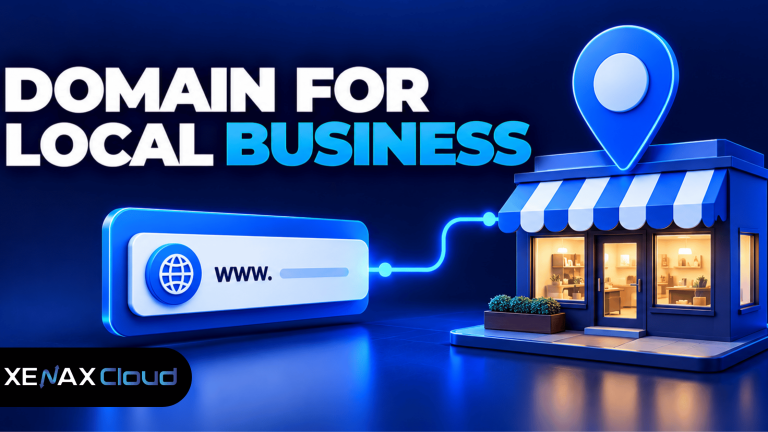
A domain for local business is the web address customers use to find a business online, such as a name ending in .com or another supported domain extension. A suitable domain reflects your brand, is easy to remember and works on business cards, invoices, search results and social profiles. The right choice depends on your business name, target area and long-term plans.
A local business website can help customers check services, opening hours, contact details, locations and appointment options. Before building the website, choose a domain that you can continue using if your services expand or you begin serving customers outside your current city.
The following sections explain how to select a domain, when to include a city name, which extension to consider and how to register it.
What Makes a Good Domain for Local Business?
A good domain for local business is short, recognisable, easy to spell and closely associated with the business name or service. Customers should be able to hear the address once and type it correctly later.
For example, a fictional business called Sunrise Dental Clinic might consider a domain based on its clinic name rather than a long address containing several service keywords. The shorter option is usually easier to communicate verbally and print on appointment cards.
Use these checks when comparing names:
- Keep it simple: Avoid unnecessary hyphens, unusual spellings and long strings of words.
- Match your brand: Use the business name or a clear variation that customers will recognise.
- Make it pronounceable: A name that is easy to say is easier to share by phone.
- Avoid temporary details: Do not include a year or short-term promotion if you plan to keep the domain for years.
- Check legal conflicts: Make sure the name does not improperly use another business’s trademark.
- Think beyond one channel: Choose a name that works on signage, invoices, email addresses and social profiles.
A domain does not need to contain every service keyword. A name such as sunrisedental.com may be easier to build into a long-term brand than a lengthy address containing a city, neighbourhood and multiple treatments.
Before connecting your website, learn how DNS records connect a domain to web hosting so you can point your domain to the correct server.
Before choosing a domain for local business, understand the difference between a domain name and web hosting. Your domain is your website’s address, while hosting stores your website’s files and makes them accessible online. Read our guide on the difference between a domain and web hosting to understand how both work together.
Should your domain match your registered business name?
Matching the domain to your business name is often a sensible starting point because it helps customers connect your website with your offline identity. If the exact name is unavailable, consider a clear variation that does not mislead customers or create a trademark conflict.
Before registering a variation, check whether another business already uses a similar name. Also review the name’s spelling and pronunciation with someone who has not seen it before.
Should You Include a City Name in Your Local Business Domain?
A city name domain can help visitors understand which location a business serves, but it is not a guarantee of better local search rankings. Include a city name when the location is central to the brand and you expect the name to remain appropriate as the business develops.
For example, a fictional business serving customers only in Jaipur might consider a name that combines its brand with Jaipur. A company planning to open branches in Jaipur, Lucknow and Delhi may prefer a broader brand domain that does not tie the business to one city.
Local business domain name options compared
A local business domain name should reflect how customers know your business and how far you expect it to operate. Compare the main naming approaches before making a final decision.
| Domain approach | Best suited to | Main benefit | Main limitation |
| Brand name | Businesses building a long-term identity | Easy to keep if services expand | The exact name may be unavailable |
| Brand plus city | Businesses serving one main city | Makes the location clear | May feel restrictive after expansion |
| Service plus location | Businesses with a clearly defined local service | Communicates the offer and area | Can become long or generic |
| Brand plus broad extension | Businesses expecting wider reach | Supports a flexible brand identity | The extension alone does not establish trust |
These are naming approaches, not guarantees of search performance. Search engines use multiple signals to understand local relevance, and the domain name is only one part of the website’s overall identity.
When is a city name domain a poor choice?
A city name domain may be unsuitable if you plan to expand into other locations, change your primary service area or build a brand that is not tied to one place. In that situation, a brand-led domain gives you more room to grow without changing your main web address.
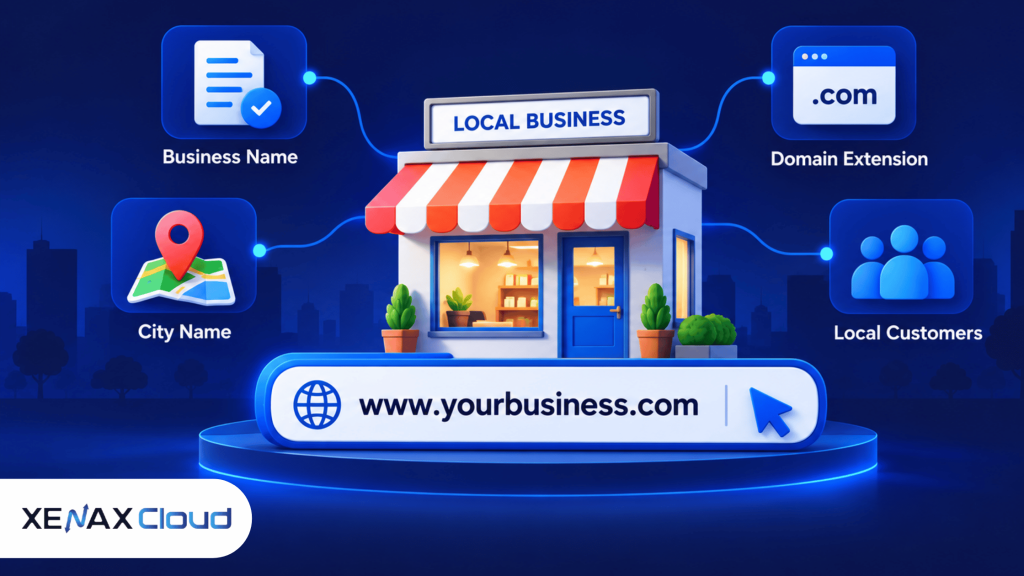
How to Choose a City Name Domain
Choose a city name domain when the location is a stable part of your business identity and the full address remains readable. The name should still be easy to remember when spoken aloud or printed in a small space.
A city name domain is a web address that includes a city or place name as part of the registered domain. For example, a fictional repair company could consider a brand-and-city combination if it operates mainly in that city.
Use this decision rule:
- Choose a brand-only name if you expect to serve multiple cities or offer new services.
- Choose brand plus city if one location defines your business and is likely to remain central.
- Choose service plus location if customers mainly search for a specific service in a particular area and the resulting name stays short.
- Avoid adding a city name if it makes the domain difficult to spell, excessively long or confusing.
A worked example: a home-repair business in Lucknow
Suppose a fictional home-repair business in Lucknow offers plumbing, electrical repairs and maintenance. The owner wants a domain for a local audience but may later expand into Kanpur.
A brand-only domain would be the most flexible choice if the business wants to build recognition across both cities. A brand-plus-Lucknow domain could communicate its current service area more clearly, but it might become less suitable when the Kanpur branch opens.
The owner should compare the available names, check for similar registered businesses and select an extension that fits the intended audience. Neither the city keyword nor the extension guarantees a particular position in search results.
Which Domain Extension Should a Local Business Choose?
The right domain extension depends on brand availability, customer expectations and the audience you plan to serve. A familiar extension can make an address easier to recognise, but the name itself and the quality of the website also matter.
Common options include:
- .com: A widely recognised general-purpose extension suitable for many types of businesses.
- .org: Often associated with organisations, associations and community groups; check whether it suits the impression your business wants to create.
- .net: A general-purpose extension that can work when the preferred .com name is unavailable.
- .xyz: An alternative extension that may suit a modern brand if customers can remember it easily.
- .online: An extension that explicitly suggests an online presence.
Availability varies by domain name and registrar. Do not assume that a particular extension is available simply because the same name is available under another extension.
Before registering, compare the first-year registration terms with the renewal terms. The initial registration and subsequent renewals can have different conditions. Also review the registrar’s renewal process, domain transfer rules and account recovery options.
For available extensions and registration options, visit Xenax Cloud domain registration.
How to Register a Domain for Local Business
You can register a domain by checking name availability, choosing an extension, reviewing registration and renewal terms, and completing the registrar’s order process. Make sure the domain is registered under an account you control.
Follow these steps before committing to a name.
- List candidate names. Write down your business name and a few short variations.
- Check availability. Search the registrar for each name and extension.
- Review conflicts. Search for similar business names and possible trademark issues.
- Compare extensions. Select an extension that suits your customers and brand.
- Read renewal terms. Check the ongoing renewal conditions, transfer rules and expiry process.
- Register the domain. Enter accurate registrant details and complete the order.
- Secure the account. Use a unique password, enable multi-factor authentication if available and keep recovery details current.
After registration, save the confirmation and account details securely. A domain registration does not automatically create a website, provide hosting or configure email. Those services require their own setup.
What should you do after registration?
Once the domain is registered, connect it to your website hosting by configuring the required DNS records or nameservers. If you already have a live website or domain email, check the existing DNS records before making changes.
A mistaken DNS update can interrupt website access or email delivery. Record the current settings before editing them, and verify both the website and email services after the changes take effect.
For help understanding domain records, use the official ICANN domain name resources to learn more about registration and domain management.
How Does a Domain Help Local Search Visibility?
A domain helps customers recognise your business online, but local search visibility depends on more than the web address. Your website content, business information, relevance to the search and other local signals all contribute to how customers discover your services.
A domain containing a city name may provide context to a human reader, but it does not replace useful location pages or accurate business information. A business operating in multiple areas should make each service area clear without creating duplicate or misleading pages.
To support local discovery:
- Use consistent business name, address and phone details wherever you publish them.
- Create clear service pages that explain what you do and which locations you genuinely serve.
- Keep opening hours, contact details and appointment instructions current.
- Make the website usable on mobile devices, where many local customers browse.
- Add descriptive page titles and headings that reflect the actual service.
- If eligible, maintain an accurate Google Business Profile and follow its guidelines.
Do not register several similar domains simply to target different keywords or cities unless each domain serves a genuine, distinct purpose. Multiple domains can divide brand recognition and create extra renewal and maintenance work.
Does a city keyword in a domain improve rankings?
A city keyword in a domain does not guarantee higher rankings for local searches. It can make the intended service area obvious to users, but search engines consider the broader relevance and quality of the website and its business information.
For example, a plumber serving Jaipur can communicate that service area through a clear service page, accurate contact information and a well-maintained business profile. A domain containing “Jaipur” may reinforce the brand, but it cannot compensate for inaccurate information or weak service content.
Choosing a domain for local business starts with a memorable name, a suitable extension, and a clear understanding of the customers you want to reach.
Domain for Local Business: FAQs
What is the best domain for a local business?
The best domain for a local business is a memorable address that matches its brand, suits its customers and remains useful as the business grows. Start with the business name, then compare short variations and suitable extensions. Check availability, trademark conflicts and renewal terms before registering the final choice.
Should I include my city name in my business domain?
Include your city name if one location is a stable and important part of your business identity. If you plan to serve several cities, a broader brand domain may be more flexible. A city name can clarify your audience, but it does not guarantee better local search rankings.
Which domain extension is suitable for a local business?
.com is a familiar general-purpose option for many businesses, while .org, .net, .xyz and .online may suit different brands and audiences. Compare name availability and renewal conditions before choosing. The extension should be easy for your customers to recognise and should fit the impression your business wants to create.
Can I change my domain name after registering it?
You can register a different domain and point it to your website, but changing the main domain requires careful planning. Update website settings, internal links, email configuration and relevant search engine signals. If the original site is already indexed, implement appropriate redirects and keep the old domain active during the transition.
Does buying a domain include website hosting?
No, registering a domain does not automatically provide website hosting or build a website. The domain is the address, while hosting stores and serves the website files. You need to connect the domain to a suitable hosting service and configure DNS records before visitors can reach the intended website.
Should I register more than one domain for my business?
Register additional domains only when they protect a meaningful brand variation or serve a clear business purpose. Owning several similar domains creates renewal and management work, and it does not automatically improve search rankings. Choose one primary domain for your website and redirect any additional domains appropriately.
Choose a short brand-led domain if you expect to expand beyond one city, or a brand-and-city name if your service area is likely to remain local. Check the available extensions and renewal terms through Xenax Cloud domain registration before placing your order.