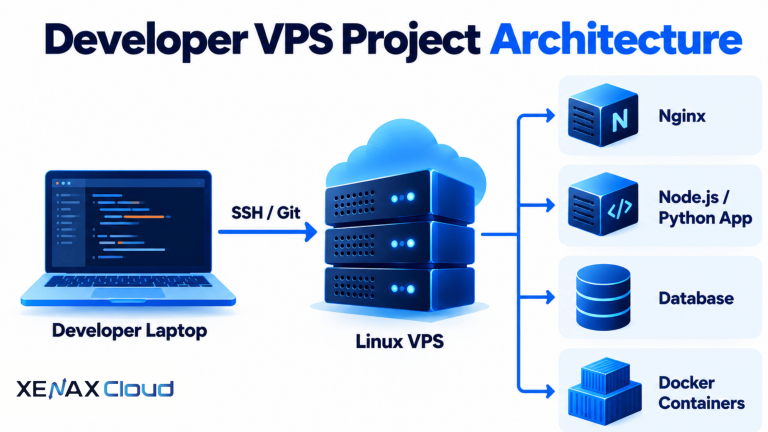
An unmanaged Linux VPS is an excellent choice for developers, system administrators, and businesses that want complete control over their server environment. Unlike managed hosting, an unmanaged VPS gives you full root access, allowing you to install software, configure security, optimize performance, and manage every aspect of the operating system yourself.
As cloud computing continues to grow, Linux VPS hosting remains one of the most popular choices because of its flexibility, stability, and cost efficiency. India has become a leading destination for VPS hosting due to affordable infrastructure, low latency across Asia, enterprise-grade security, strong international connectivity, and scalable data centers capable of serving businesses worldwide.
In this unmanaged Linux VPS guide, you’ll learn what unmanaged VPS hosting is, its advantages, practical use cases, and essential unmanaged Linux VPS tips to help you choose the right hosting solution.

What Is an Unmanaged Linux VPS?
An unmanaged Linux VPS is a virtual private server where the hosting provider supplies the infrastructure while the customer is responsible for server administration.
This includes:
- Operating system installation
- Software configuration
- Security updates
- Firewall management
- Performance optimization
- Backup configuration
- Application deployment
- Troubleshooting
Unlike managed hosting, technical support focuses primarily on infrastructure rather than operating system administration.
Because users have full administrative control, unmanaged VPS hosting is popular among experienced developers and Linux professionals.
Benefits of an Unmanaged Linux VPS
Choosing an unmanaged Linux VPS offers several important advantages.
Complete Root Access
Users receive unrestricted administrative access to install applications, customize configurations, and optimize the server.
Greater Flexibility
Developers can choose their preferred Linux distribution, web server, programming language, database, and software stack.
Better Performance
Dedicated virtual resources ensure applications perform consistently without interference from neighboring users.
Cost-Effective Hosting
Since server management is handled by the customer, unmanaged VPS plans are often more affordable than fully managed solutions.
Learning Opportunity
An unmanaged VPS provides an excellent environment for learning Linux administration, networking, automation, and server security.
How to Choose the Right Unmanaged Linux VPS
Selecting the best unmanaged Linux VPS depends on your workload and technical expertise.
CPU Performance
Choose enough virtual CPU cores to handle expected workloads efficiently.
RAM Capacity
Memory requirements vary depending on websites, databases, containers, or applications running on the server.
SSD Storage
High-speed SSD storage improves application responsiveness and database performance.
Bandwidth
Select sufficient bandwidth to support your expected traffic volume.
Technical Infrastructure
Although the VPS is unmanaged, the provider should still offer reliable networking, enterprise-grade hardware, and dependable uptime.
For developers seeking reliable Linux infrastructure, XenaxCloud VPS Hosting provides SSD-powered virtual private servers, scalable resources, enterprise-grade security, and full root access for complete server control.
Internal Link: https://xenaxcloud.com/vps-server/
Scalability Options for Startups and Agencies
One of the biggest advantages of an unmanaged Linux VPS is its scalability.
Startups can begin with smaller VPS plans and increase CPU, RAM, storage, and bandwidth as traffic grows.
Agencies hosting multiple client projects can deploy separate development, staging, and production servers while maintaining full administrative control. This flexibility allows businesses to expand without migrating to an entirely new hosting platform.
Unmanaged VPS vs Managed VPS
| Feature | Unmanaged Linux VPS | Managed VPS |
|---|---|---|
| Root Access | Full Control | Available |
| Server Management | Customer | Hosting Provider |
| Software Installation | Complete Freedom | Provider Assistance |
| Customization | Excellent | Moderate |
| Technical Expertise | Required | Minimal |
| Best For | Developers & System Administrators | Businesses Wanting Managed Support |
Recommended XenaxCloud VPS Plans
For users looking for an unmanaged Linux VPS, these XenaxCloud plans are ideal:
Learning & Small Projects
KVM VPS 1 — 2 Vcore CPU, 8GB RAM, 40GB Storage, 2TB Bandwidth — see current pricing
Growing Applications
KVM VPS 2 — 4 Vcore CPU, 16GB RAM, 50GB Storage, 4TB Bandwidth — see current pricing
High-Performance Development
KVM VPS 3 — 8 Vcore CPU, 32GB RAM, 80GB Storage, 5TB Bandwidth — see current pricing
Visit the XenaxCloud Offers page to explore the latest VPS promotions and exclusive discounts.
Frequently Asked Questions
What is the difference between Indian VPS and foreign VPS?
Can Indian servers handle global website traffic?
Is Indian hosting cost-effective for international users?
How reliable is XenaxCloud hosting?
How to choose the right server for my business?
Conclusion
Choosing an unmanaged Linux VPS gives developers and system administrators complete control over their hosting environment while delivering the performance, flexibility, and scalability needed for modern applications. This unmanaged Linux VPS guide explained the key benefits, common use cases, and essential unmanaged Linux VPS tips for selecting the right server. With the right infrastructure and technical expertise, an unmanaged VPS can support everything from development projects to enterprise workloads.
With XenaxCloud VPS Hosting, you get SSD-powered performance, enterprise-grade infrastructure, scalable resources, full root access, and dependable uptime for complete server control. Every VPS plan includes a 15-day money-back guarantee, so you can deploy with confidence. Visit the XenaxCloud Offers page today to discover the latest deals and exclusive discounts on VPS hosting.