Choosing the right hosting solution is one of the most important decisions for any website or application. Many businesses struggle with the question of VPS or cloud because both options offer excellent performance, scalability, and reliability. However, each hosting type is designed for different workloads, budgets, and business goals. Understanding their differences helps you avoid unnecessary costs while ensuring your applications perform efficiently.
Whether you’re launching an eCommerce store, business website, SaaS platform, or development environment, selecting the correct infrastructure directly impacts speed, uptime, security, and future growth. Modern hosting providers now offer enterprise-grade VPS and cloud platforms that support everything from small startups to global enterprises.
Indian hosting infrastructure has become an excellent choice for businesses worldwide thanks to its affordable pricing, low latency across Asia, enterprise-level security, reliable networking, and scalable infrastructure. Whether you choose VPS or cloud, hosting your applications on modern Indian servers provides a balance of performance and cost-effectiveness for regional and international audiences.
In this VPS or cloud guide, you’ll learn the key differences between VPS and cloud hosting, compare their advantages, understand when each option is the better choice, and discover how to select the right hosting plan for your business.

Why Indian Servers Are a Smart Choice
Reliable infrastructure plays a major role in website performance regardless of whether you choose VPS or cloud hosting. Modern Indian data centers provide enterprise-grade hosting that supports businesses serving both local and global users.
Cost-Effective Infrastructure
Indian hosting providers offer enterprise-quality VPS and cloud environments at competitive prices, making them suitable for startups, developers, agencies, and growing businesses.
Low Latency Across Asia
Indian servers provide excellent connectivity across:
- India
- Singapore
- UAE
- Bangladesh
- Nepal
- Sri Lanka
- Southeast Asia
This strategic location delivers excellent response times for Asian visitors while maintaining competitive global connectivity.
Security, Reliability, and Compliance
Enterprise infrastructure includes:
- SSD-powered storage
- Enterprise firewall protection
- DDoS mitigation
- Secure virtualization
- 24/7 infrastructure monitoring
- High-availability networking
These features ensure websites remain secure, stable, and continuously available.
Scalability for International Businesses
Businesses can increase CPU, RAM, storage, and bandwidth whenever workloads grow without rebuilding their hosting environment.
VPS or Cloud: Understanding the Difference
The debate between VPS or cloud usually starts with understanding how each hosting solution works.
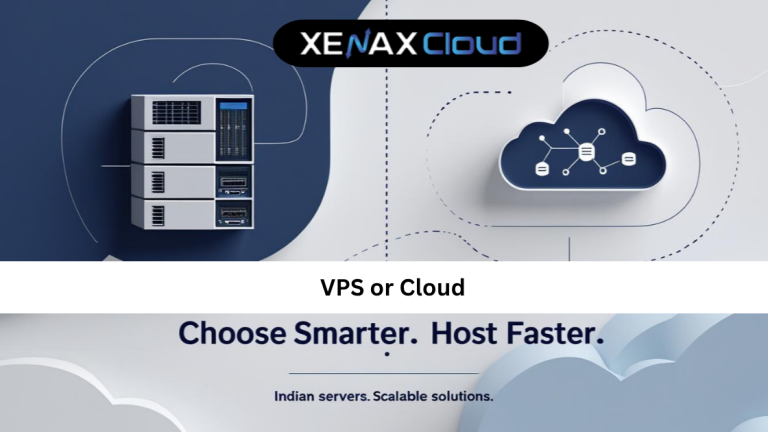
A Virtual Private Server (VPS) is a virtual machine created on a physical server. Each VPS receives dedicated resources such as CPU, RAM, and storage, providing consistent performance and greater control than shared hosting.
Cloud hosting, on the other hand, uses multiple interconnected servers instead of relying on a single physical machine. Resources are distributed across a cloud infrastructure, allowing workloads to continue running even if one server experiences issues.
When comparing VPS or cloud, the main difference lies in resource allocation and infrastructure design. VPS offers dedicated virtual resources on one server, while cloud hosting distributes resources across several servers for improved flexibility and redundancy.
Both hosting solutions provide significant improvements over shared hosting, but choosing the right option depends on your application requirements.
VPS vs Cloud Hosting Features
A complete VPS or cloud tutorial should compare the core features of both hosting environments.
Performance
A VPS provides dedicated CPU, RAM, and storage resources, ensuring predictable and stable performance.
Cloud hosting distributes workloads across multiple servers, making it highly efficient for applications experiencing fluctuating traffic.
Resource Allocation
With VPS hosting, allocated resources remain reserved for your virtual server.
Cloud hosting can dynamically scale resources based on demand, making it suitable for rapidly growing applications.
Management
VPS hosting offers greater control over the operating system, software installation, and server configuration.
Cloud hosting may offer managed services depending on the provider, reducing administrative responsibilities.
Reliability
A VPS depends primarily on its physical host server.
Cloud infrastructure improves redundancy because workloads can continue running across multiple servers if hardware issues occur.
Cost Structure
VPS hosting typically uses predictable monthly pricing.
Cloud hosting costs often depend on actual resource consumption, making expenses more variable for some workloads.
Advantages of VPS Hosting
Businesses choosing VPS or cloud often select VPS because of its balance between performance, affordability, and administrative control.
Dedicated Resources
Your applications receive dedicated CPU, RAM, and storage that are not shared with other users.
Better Customization
Administrators have root access, allowing complete control over server configuration and software installation.
Predictable Pricing
Fixed monthly pricing simplifies budgeting and infrastructure planning.
Excellent Performance
VPS hosting delivers stable performance for websites, development environments, databases, APIs, and business applications.
Easier Server Management
Developers can configure operating systems, firewalls, security policies, and software according to project requirements.
Advantages of Cloud Hosting
Cloud hosting also provides several benefits depending on business requirements.
Flexible Scaling
Resources can increase automatically during periods of high demand.
High Availability
Multiple servers reduce the impact of hardware failures.
Disaster Recovery
Distributed infrastructure improves resilience and business continuity.
Global Infrastructure
Many cloud providers operate multiple data centers worldwide for international workloads.
Real-World Use Cases
The best way to decide between VPS or cloud is by understanding how businesses use each solution.
Business Websites
Growing businesses often choose VPS hosting because it provides reliable performance, dedicated resources, and predictable monthly costs.
eCommerce Stores
Online stores require fast loading speeds, secure payment processing, and stable uptime. Both VPS and cloud hosting support eCommerce, but VPS is often preferred for medium-sized stores with consistent traffic.
Software Development
Developers use VPS hosting to deploy applications, run Docker containers, create staging environments, and manage databases with complete server control.
SaaS Platforms
Cloud hosting works well for SaaS applications experiencing unpredictable or rapidly changing traffic because additional resources can be allocated when required.
Enterprise Applications
Large organizations frequently combine VPS and cloud infrastructure to balance performance, scalability, redundancy, and cost efficiency.
Comparison: Indian Servers vs Foreign Hosting
| Feature | India | USA | Canada | Germany | UAE |
|---|---|---|---|---|---|
| Asia Performance | Excellent | Moderate | Moderate | Good | Very Good |
| Global Performance | Very Good | Excellent | Excellent | Excellent | Good |
| 24/7 Technical Support | Available | Available | Available | Available | Available |
| Fast Provisioning | Excellent | Excellent | Excellent | Excellent | Excellent |
| Uptime & Reliability | Excellent | Excellent | Excellent | Excellent | Very Good |
| Security & Compliance | Advanced | Advanced | Advanced | Advanced | Advanced |
| Scalability | Highly Scalable | Highly Scalable | Highly Scalable | Highly Scalable | Scalable |
Scalability Options for Startups and Agencies
One of the biggest considerations when choosing VPS or cloud is future growth. Startups usually begin with predictable workloads, making VPS hosting a cost-effective option that delivers dedicated resources and stable performance. As websites gain more traffic, VPS plans can be upgraded by increasing CPU, RAM, storage, and bandwidth without changing the hosting environment.
Digital agencies managing multiple client websites also benefit from VPS hosting because they receive isolated resources, improved security, and complete administrative control. If projects eventually require distributed infrastructure or global redundancy, businesses can later expand into cloud-based environments. This flexibility allows organizations to scale confidently while keeping infrastructure costs under control.
Frequently Asked Questions
What is the difference between Indian VPS and foreign VPS?
Can Indian servers handle global website traffic?
Is Indian hosting cost-effective for international users?
How reliable is XenaxCloud hosting?
How to choose the right server for my business?
Conclusion
Choosing between VPS or cloud depends on your business goals, technical requirements, and expected growth. VPS hosting is an excellent choice for organizations that need dedicated resources, predictable pricing, and complete server control, while cloud hosting offers flexible scalability for rapidly changing workloads. Understanding these differences helps you invest in infrastructure that delivers the right balance of performance, reliability, and cost.
For businesses looking for enterprise-grade hosting, XenaxCloud VPS Hosting provides SSD-powered infrastructure, dedicated resources, advanced security, and scalable performance for websites, applications, databases, and development environments. Every VPS plan includes a 15-day money-back guarantee, giving you confidence in your hosting investment. Visit the XenaxCloud Offers Page to explore the latest deals and choose the VPS solution that best supports your business.