Many beginners assume that a website and a domain name are the same thing. Although they work together, they serve completely different purposes. Understanding site vs domain is one of the first steps in building a successful online presence. Whether you’re creating a personal blog, launching an online store, or building a business website, knowing the difference helps you make better decisions when purchasing hosting and registering a domain.
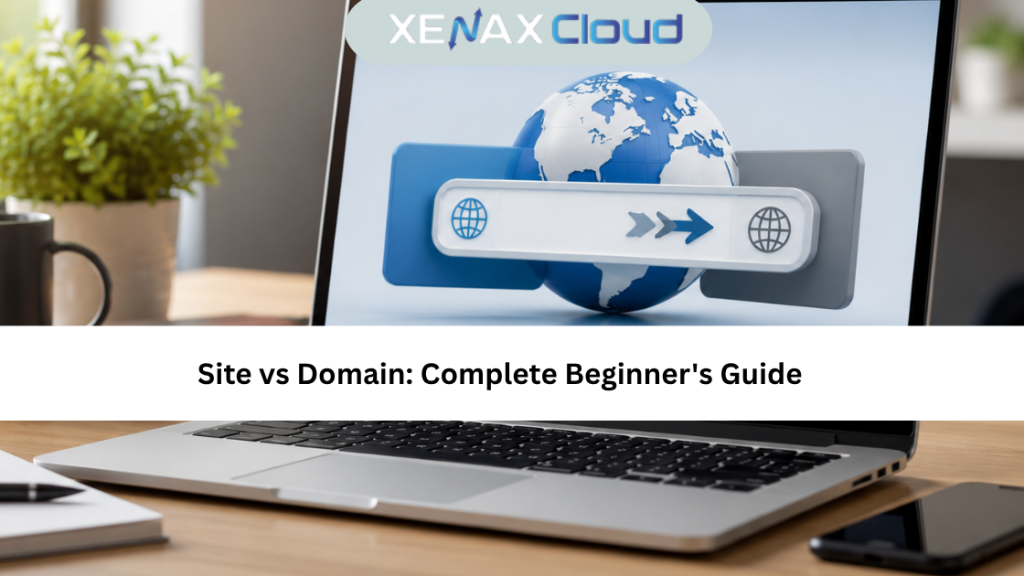
A domain name acts as your website’s address on the internet, while a website is the collection of web pages, images, content, and applications that visitors access using that address. Without a domain, users cannot easily find your website, and without a website, a domain simply points to an empty location.
Modern Indian hosting infrastructure offers an excellent foundation for websites of all sizes. Enterprise-grade hosting, reliable domain services, SSD-powered storage, advanced security, and low latency across Asia make India a smart choice for businesses serving customers both locally and globally.
In this site vs domain guide, you’ll learn the difference between a domain and a website, how they work together, why both are important, and how to choose the right domain registration and hosting solution for your business.
Why Indian Servers Are a Smart Choice
Reliable hosting and domain services are essential for building a fast, secure, and accessible website. Modern Indian data centers provide enterprise-grade infrastructure suitable for bloggers, startups, businesses, agencies, and online stores.
Cost-Effective Infrastructure
Indian hosting provides enterprise-quality performance at affordable pricing, making it an excellent option for businesses that want reliable hosting without overspending.
Low Latency Across Asia
Indian servers provide excellent connectivity throughout:
- India
- Singapore
- UAE
- Bangladesh
- Nepal
- Sri Lanka
- Southeast Asia
This strategic location helps deliver faster loading speeds for regional visitors while maintaining reliable global performance.
Security, Reliability, and Compliance
Enterprise hosting platforms include:
- SSD-powered storage
- Enterprise firewall protection
- DDoS mitigation
- SSL support
- 24/7 infrastructure monitoring
- High-speed networking
These features help websites remain secure and available around the clock.
Scalability for Growing Businesses
As your website grows, hosting resources can be upgraded without requiring complex migrations or lengthy downtime.
Site vs Domain: What’s the Difference?
Understanding site vs domain is much easier when you compare them to a physical business.
A domain name is like your business address.
A website is like the actual building where your products, services, and information are available.
The two work together, but they are not the same.
For example:
- Domain: example.com
- Website: Everything visitors see after opening example.com
Without a domain, visitors cannot easily locate your website.
Without a website, the domain has nothing useful to display.
Learning site vs domain helps beginners understand how websites are published on the internet.
What Is a Domain Name?
A domain name is the unique web address people type into a browser to visit a website.
Examples include:
- google.com
- xenaxcloud.com
- wikipedia.org
Instead of remembering complex IP addresses, users simply enter an easy-to-read domain name.
A domain name consists of:
- Domain name
- Domain extension (.com, .net, .org, .in, etc.)
Domains are registered through accredited domain registrars and renewed annually.
Understanding site vs domain begins with recognizing that a domain simply directs visitors to the server where your website is hosted.
What Is a Website?
A website is the complete collection of pages, images, videos, databases, applications, and files stored on a web hosting server.
Typical website components include:
- Homepage
- About page
- Blog posts
- Product pages
- Contact forms
- Images
- Videos
- Databases
When someone enters your domain name into a browser, the hosting server delivers these files to the visitor.
This is another important difference in site vs domain because the website contains the actual content while the domain serves as the address.
Site vs Domain: Key Differences Explained
Understanding site vs domain becomes much easier when comparing both side by side.
Purpose
A domain identifies the location of a website.
A website provides information, products, or services to visitors.
Ownership
Domains must be registered through a domain registrar.
Websites are created using hosting services, website builders, or content management systems like WordPress.
Storage
A domain stores no website content.
A website stores:
- Pages
- Images
- Databases
- Files
- Applications
Dependency
A website can technically exist without a custom domain using temporary URLs.
However, professional businesses almost always use both hosting and a custom domain.
How to Choose the Right Domain and Hosting
Choosing the right domain and hosting is just as important as understanding site vs domain.
Choose a Short Domain
Short domain names are easier to remember, type, and share.
Select the Right Extension
Popular options include:
- .com
- .net
- .org
- .in
Choose the extension that best matches your audience and business.
Use Reliable Hosting
Fast hosting improves:
- Website speed
- Security
- SEO
- Visitor experience
Plan for Future Growth
Choose scalable hosting that can support increasing traffic as your business grows.
For domain registration and website management, explore XenaxCloud Domains.
Internal Link: https://xenaxcloud.com/domain/
Recommended Service
Domain Registration with XenaxCloud
Benefits include:
- Easy domain registration
- Wide range of domain extensions
- Domain management tools
- DNS management
- Domain renewal support
- Reliable customer assistance
The latest domain registration offers and discounts are available on the XenaxCloud Offers Page.
Speed, Uptime, and Security Advantages
Understanding site vs domain is important, but choosing reliable hosting is equally essential for building a fast and secure website. A domain name helps visitors find your website, while quality hosting ensures the website loads quickly, remains online, and protects user data. Together, they create a reliable online presence for businesses, bloggers, and developers.
Faster Website Performance
Reliable hosting improves website speed and user experience.
Performance benefits include:
- SSD-powered storage
- Optimized web servers
- High-speed networking
- Fast page loading
- Low-latency connectivity
These features help websites load quickly for visitors while improving search engine performance.
High Uptime
A website should remain available 24/7 so customers can access it anytime.
Reliable hosting infrastructure includes:
- Enterprise processors
- SSD storage
- Redundant networking
- 24/7 infrastructure monitoring
- Automatic failover systems
- High uptime
These technologies reduce downtime and keep websites accessible.
Enterprise-Level Security
A professional website requires strong security alongside a registered domain.
Enterprise hosting includes:
- Enterprise firewall protection
- DDoS mitigation
- Malware scanning
- SSL certificate support
- Automated backups
- Continuous monitoring
These features help protect websites from cyber threats while keeping customer information secure.
Better Website Management
Understanding site vs domain helps website owners manage domain renewals, DNS settings, web hosting, SSL certificates, email services, and website files more efficiently.
Real-World Use Cases
Learning site vs domain helps beginners and businesses build and manage websites more effectively.
Business Websites
Companies register professional domains to build trust while hosting websites that showcase their products and services.
Personal Blogs
Bloggers use memorable domain names connected to reliable hosting to publish articles and grow their audience.
eCommerce Stores
Online stores combine domain registration with high-performance hosting to provide secure shopping experiences.
Agency Projects
Digital agencies manage multiple domains and websites for clients while maintaining centralized hosting and DNS management.
Startup Businesses
Startups launch their first websites by registering a domain and selecting scalable hosting that grows with their business.
Why Indian Servers Can Handle Global Traffic Efficiently
Modern websites often attract visitors from around the world. Indian hosting infrastructure provides enterprise-grade performance capable of serving both regional and international audiences.
Strategic Geographic Location
India provides excellent connectivity across Asia while maintaining competitive response times for Europe, North America, and the Middle East.
Premium Global Connectivity
Leading hosting providers maintain direct connections with major internet exchanges, reducing latency and improving network reliability.
Enterprise Infrastructure
Enterprise hosting platforms include:
- Enterprise processors
- SSD-powered storage
- High-speed networking
- Redundant power systems
- Advanced cooling
- Scalable infrastructure
These technologies ensure websites remain fast, reliable, and responsive under different traffic conditions.
CDN Compatibility
Businesses can integrate Content Delivery Networks (CDNs) to improve website performance for visitors worldwide while reducing server load.
Comparison: Indian Servers vs Foreign Hosting
| Feature | India | USA | Canada | Germany | UAE |
|---|---|---|---|---|---|
| Asia Performance | Excellent | Moderate | Moderate | Good | Very Good |
| Global Performance | Very Good | Excellent | Excellent | Excellent | Good |
| 24/7 Technical Support | Available | Available | Available | Available | Available |
| Fast Provisioning | Excellent | Excellent | Excellent | Excellent | Excellent |
| Uptime & Reliability | Excellent | Excellent | Excellent | Excellent | Very Good |
| Security & Compliance | Advanced | Advanced | Advanced | Advanced | Advanced |
| Scalability | Highly Scalable | Highly Scalable | Highly Scalable | Highly Scalable | Scalable |
Scalability Options for Startups and Agencies
As your online presence grows, understanding site vs domain becomes even more important. Startups can begin with a single domain and a small hosting plan, then upgrade resources as website traffic increases. Agencies managing multiple client websites also benefit from scalable hosting because they can manage several domains, websites, email services, and DNS records from one reliable platform without affecting existing projects.
Frequently Asked Questions
What is the difference between Ind
Indian hosting provides excellent connectivity across Asia, enterprise-grade infrastructure, competitive global performance, and scalable resources suitable for businesses serving international visitors.
Can Indian servers handle global website traffic?
Yes. Modern Indian data centers use premium networking, SSD-powered infrastructure, and CDN compatibility to deliver reliable website performance worldwide.
Is Indian hosting cost-effective for international users?
Yes. Indian hosting combines enterprise-grade infrastructure, advanced security, competitive pricing, and scalable hosting resources, making it an excellent option for businesses worldwide.
How reliable is XenaxCloud hosting?
XenaxCloud offers reliable hosting with SSD-powered infrastructure, advanced security, excellent uptime, scalable resources, and professional technical support for websites of all sizes.
How to choose the right server for my business?
Choose hosting based on website traffic, storage, security, scalability, and business goals. Pairing reliable hosting with the right domain ensures your website performs well as your business grows.
Conclusion
Understanding site vs domain is essential for anyone building a website. A domain name serves as your website’s address, while the website itself contains the content visitors access. Both work together to create a professional online presence. By choosing the right domain, reliable hosting, and scalable infrastructure, businesses can improve website performance, strengthen their brand, and provide a better experience for users worldwide.
XenaxCloud makes it easy to register domains and host websites with enterprise-grade infrastructure, SSD-powered performance, advanced security, and dependable uptime. Whether you’re launching your first blog, growing an online business, or managing multiple websites, XenaxCloud provides reliable solutions backed by a 15-day money-back guarantee on eligible hosting plans. The latest deals and exclusive offers are always available on the XenaxCloud Offers Page, helping you build your online presence with confidence.