When websites fail to load, emails do not arrive, or domains behave inconsistently, DNS is often the hidden reason. For macOS users, especially developers, system administrators, and website owners, learning MacBook nslookup is one of the simplest and most effective ways to diagnose DNS-related issues.
Nslookup is a built-in command-line tool available on macOS that helps you query DNS servers and retrieve records like A, MX, and TXT. It works without installing any third-party software and provides instant insights into how a domain is resolving across the internet.
Indian hosting infrastructure has become increasingly relevant for DNS-dependent services. With cost-effective servers, strong global routing, and reliable uptime, Indian servers can handle DNS queries efficiently for international traffic. This makes them a smart choice for developers and businesses managing domains globally.
What Is Nslookup and Why MacBook Users Should Use It
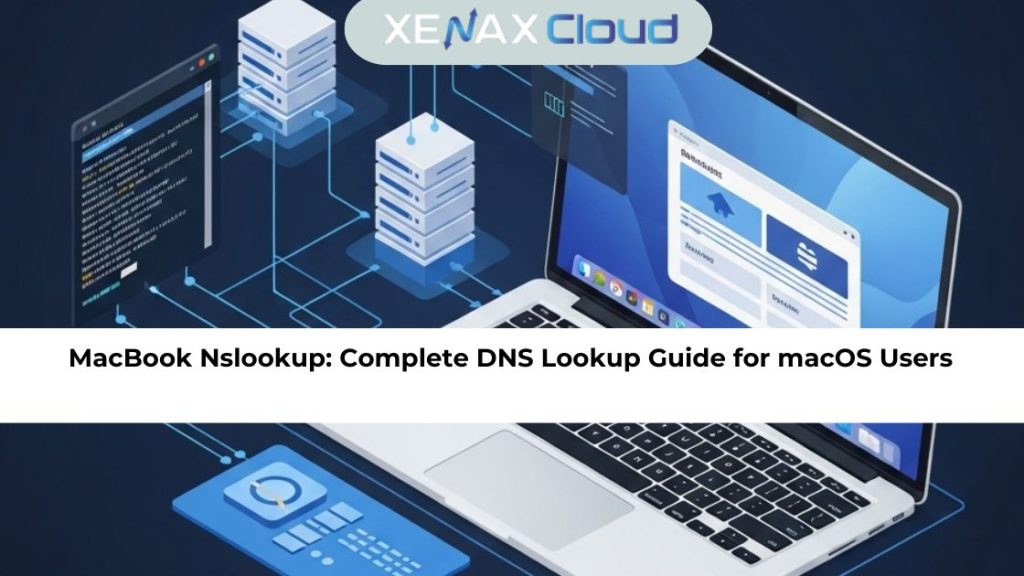
Nslookup stands for “Name Server Lookup.” It allows you to query DNS servers directly and see how domain names map to IP addresses. On a MacBook, nslookup runs inside the Terminal and communicates with DNS resolvers in real time.
Using macbook nslookup helps you verify whether DNS records are configured correctly, identify propagation delays, and detect misconfigured name servers. It is especially useful when switching hosting providers, updating DNS records, or troubleshooting slow website loading issues.
Unlike browser-based tools, nslookup gives raw DNS responses, making it more accurate for technical diagnosis.
MacBook Nslookup Guide: How to Run Nslookup on macOS
This macbook nslookup guide starts with accessing the Terminal. Open Spotlight, type “Terminal,” and press Enter. Once the Terminal opens, you can run nslookup commands instantly.
The basic syntax is simple. You type nslookup followed by the domain name. The tool then queries the default DNS resolver configured on your MacBook and displays the resolved IP address.
You can also specify custom DNS servers, which is helpful when testing how a domain resolves from different locations or hosting environments. This ability makes nslookup an essential tool for DNS validation.
MacBook Nslookup Tutorial: Common Commands Explained
A practical macbook nslookup tutorial focuses on real-world commands. The most common use is checking the A record of a domain to confirm the server IP address.
Another common use is querying MX records to troubleshoot email delivery issues. Nslookup also supports TXT record lookups, which are often used for domain verification and email authentication.
Advanced users can switch to interactive mode, allowing multiple queries without restarting the command. This is useful when analyzing several DNS records quickly.
How to Choose the Right Hosting Plan for DNS Stability
DNS reliability is closely tied to server quality. While nslookup helps diagnose DNS issues, choosing the right hosting infrastructure helps prevent them.
Shared hosting may be sufficient for small websites, but larger projects benefit from VPS hosting where DNS services are more isolated and predictable. A VPS provides better control over DNS configurations and faster resolution times.
XenaxCloud VPS hosting offers a stable environment for DNS-intensive workloads and domain management:
https://xenaxcloud.com/vps-server/
A VPS is ideal when you manage multiple domains, APIs, or global traffic.
Speed, Uptime, and Security Advantages for DNS Queries
DNS speed directly impacts website loading time. Faster DNS resolution means quicker initial connections. Nslookup helps measure and verify this behavior by showing how quickly DNS servers respond.
Uptime matters because DNS outages can make websites completely inaccessible. Reliable infrastructure ensures DNS resolvers remain available even during traffic spikes.
Security is another critical factor. Proper DNS configuration prevents hijacking, spoofing, and misrouting. Indian data centers now follow strong security standards, making them reliable for global DNS operations.
Real-World Use Cases of MacBook Nslookup
Developers use macbook nslookup to debug API endpoints and microservices. System administrators rely on it to validate DNS propagation after changes.
Website owners use nslookup to confirm hosting migrations and CDN configurations. Email administrators depend on it to verify MX and SPF records.
These real-world use cases show why nslookup remains relevant even as DNS tools evolve.
Why Indian Servers Handle DNS and Global Traffic Efficiently
Indian servers are strategically positioned for Asia-Pacific traffic while maintaining competitive global connectivity. This makes DNS resolution fast and reliable for both local and international users.
Strong peering relationships ensure stable DNS query responses worldwide. Combined with cost advantages, Indian hosting infrastructure supports scalable DNS operations without sacrificing performance.
For businesses managing global domains, this balance is critical.
Scalability Options for Developers and Agencies
As projects grow, DNS complexity increases. Agencies managing multiple client domains need predictable DNS behavior.
VPS hosting allows easy scaling of resources without DNS downtime. You can upgrade CPU, RAM, and bandwidth as traffic increases, ensuring consistent DNS response times.
This scalability makes VPS-based DNS environments future-proof for growing businesses.
Comparison: Indian Servers vs Foreign Regions for DNS
| Factor | India | USA | Germany | UAE |
|---|---|---|---|---|
| DNS Response in Asia | Fast | Slow | Moderate | Moderate |
| Global Connectivity | Strong | Strong | Strong | Moderate |
| Uptime Reliability | High | High | High | High |
| Support Availability | 24/7 | 24/7 | 24/7 | 24/7 |
This comparison highlights why Indian servers are suitable for DNS-dependent workloads worldwide.
Best VPS Plans for DNS and Nslookup Testing
For developers and administrators, NORMAL KVM VPS 1 — 2 Vcore CPU, 8GB RAM, 40GB Storage, 2TB Bandwidth, $5.99 is ideal for DNS testing and small projects.
For heavier workloads, NORMAL KVM VPS 2 — 4 Vcore CPU, 16GB RAM, 50GB Storage, 4TB Bandwidth, $10.79 provides better performance and scalability.
These plans offer stable DNS resolution environments suitable for global applications.
FAQs
What is nslookup used for on a MacBook?
Nslookup checks how domain names resolve to IP addresses using DNS.
Is nslookup available by default on macOS?
Yes, nslookup is built into macOS and runs via Terminal.
Can macbook nslookup check email DNS records?
Yes, it can query MX and TXT records for email diagnostics.
Can Indian servers handle global DNS traffic?
Yes, Indian servers provide fast and reliable DNS resolution worldwide.
How reliable is XenaxCloud for DNS hosting?
XenaxCloud offers stable uptime, secure infrastructure, and 24/7 support.
Conclusion
Learning macbook nslookup gives you direct control over DNS troubleshooting and domain diagnostics. Whether you are a developer, administrator, or business owner, nslookup helps you detect issues before they impact users.
With reliable Indian data centers, scalable VPS hosting, and a 15-day money-back guarantee, XenaxCloud is a strong choice for DNS-driven projects.
The latest deals and offers are always available on the XenaxCloud Offers Page:
https://xenaxcloud.com/offers