Databases are the backbone of modern applications. From websites and ecommerce platforms to internal business systems, everything depends on structured data. That is why learning rename database in SQL query correctly is a critical skill for developers, database administrators, and businesses worldwide.
Renaming a database may look simple, but doing it the wrong way can break applications, lose connections, or cause downtime. Many developers face this task during migrations, rebranding, environment changes, or cleanup operations. The challenge is that different database engines handle database renaming differently, and not all of them support a direct rename command.
This topic matters globally because database management is no longer limited to local systems. Today, databases are hosted on cloud servers accessed by global teams. Indian hosting infrastructure has become a smart choice for such workloads due to its cost-effectiveness, low latency across Asia, competitive global performance, strong security standards, and easy scalability for international businesses.
In this detailed guide, you will learn how to rename database in SQL query safely, understand best practices, and see how the right hosting environment makes database operations smoother and more reliable.
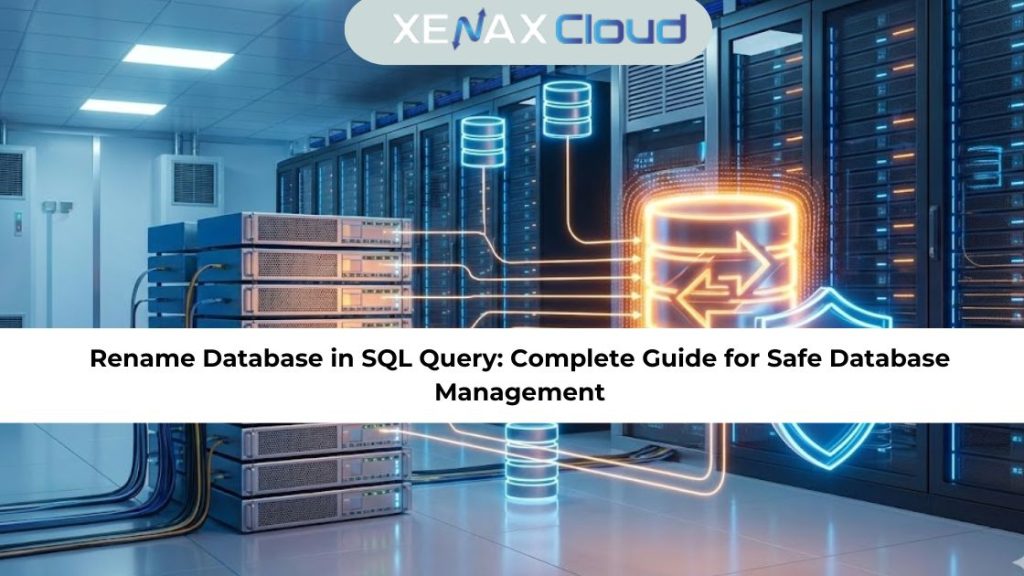
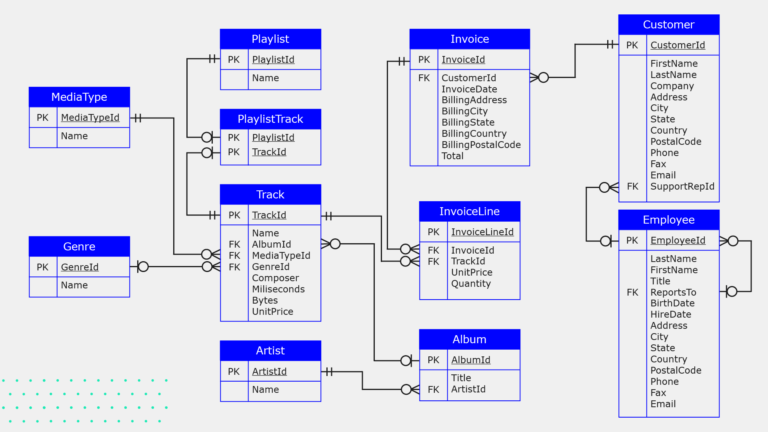
Rename Database in SQL Query: What It Really Means
The phrase rename database in SQL query does not always mean running a single command. In many database systems, there is no universal SQL statement that works everywhere.
Some database engines, like SQL Server, support renaming with specific commands. Others, like MySQL, require exporting data and importing it into a new database. This difference often confuses beginners and even experienced developers.
Renaming a database usually involves more than changing its name. Applications connected to the database use credentials, connection strings, and permissions that must also be updated. If this step is missed, applications may stop working immediately.
That is why renaming a database should always be planned carefully, especially on production servers. A stable hosting environment with full access and backups is essential before attempting such operations.
How to Choose the Right Hosting Plan for Database Operations
Before performing tasks like rename database in SQL query, your hosting plan matters more than you might think. Database-level operations require stable performance, access permissions, and backup options.
For small projects or learning environments, shared hosting is often sufficient. Plans like Shared Hosting Silver with 1 Website, 15GB Storage, and 100GB Bandwidth can handle basic SQL databases without issues.
However, for developers and businesses managing live applications, VPS hosting is a better choice. A VPS provides dedicated resources, root access, and full database control. This makes operations like database migration or renaming safer and faster.
Reliable hosting ensures that database queries execute smoothly without timeouts or permission errors. It also allows you to take backups before making changes, which is critical when renaming databases.
You can explore suitable database-friendly hosting here:
👉 https://xenaxcloud.com/vps-server/
Speed, Uptime, and Security Advantages for SQL Databases
Database operations depend heavily on server stability. Even a simple rename process may involve copying tables, updating metadata, or restarting services.
Indian servers now offer optimized storage, high uptime, and strong security. This means database queries respond quickly, and background operations complete without interruption.
Security is equally important. Renaming a database often involves elevated permissions. Secure hosting environments protect against unauthorized access while allowing legitimate administrative tasks.
With proper uptime and performance, developers can confidently execute rename database in SQL query processes without risking application downtime or data corruption.
Rename Database in SQL Query Across Different Database Systems
The approach to rename database in SQL query depends on the database engine you are using. Understanding this difference avoids costly mistakes.
In SQL Server, renaming a database is relatively straightforward using system commands. The database must not be in use, and active connections should be closed before renaming.
In MySQL, there is no direct rename database command. The common approach involves creating a new database, exporting data from the old database, and importing it into the new one. While this sounds complex, it is reliable when done correctly.
PostgreSQL supports database renaming but requires exclusive access. Active connections must be terminated before the rename operation.
These differences highlight why database renaming should always be tested in a staging environment before production.
Why Indian Servers Handle Global Database Traffic Efficiently
Modern applications often serve users from multiple regions. Databases must respond quickly regardless of where users connect from.
Indian hosting infrastructure is well-positioned to serve Asia with low latency while remaining competitive globally. Optimized network routes ensure stable access for developers and applications worldwide.
For database-heavy workloads, this means faster queries, reliable connections, and smoother administrative tasks. Renaming or migrating databases becomes less risky when the server environment is stable and responsive.
Scalability is another advantage. Indian servers allow easy upgrades as data grows, making them suitable for long-term database hosting.
Comparison: Indian Servers vs Foreign Database Hosting Regions
| Feature | India | USA | Canada | Germany | UAE |
|---|---|---|---|---|---|
| Database Latency (Asia) | Very Low | High | High | Medium | Low |
| Uptime Reliability | High | High | High | Very High | High |
| Provisioning Speed | Fast | Fast | Medium | Medium | Fast |
| 24/7 Technical Support | Available | Available | Limited | Available | Available |
Indian servers provide a balanced mix of performance, accessibility, and reliability for global database operations.
Real-World Use Cases for Renaming Databases
Renaming databases is common in real-world scenarios. Businesses rebrand and need database names that match new projects. Developers rename databases when moving from testing to production environments.
Agencies managing multiple clients often standardize database naming conventions for clarity and security. During migrations, renaming helps separate old and new data structures.
In each case, the key requirement is a controlled environment. Reliable hosting with proper access ensures that rename database in SQL query operations do not disrupt live services.
Scalability Options for Startups and Agencies
As startups grow, their databases grow with them. What starts as a single database may evolve into multiple environments for testing, staging, and production.
Cloud hosting allows databases to scale without manual hardware upgrades. Agencies benefit from isolated environments that protect client data while allowing flexible database management.
Indian hosting providers support this scalability with seamless upgrades and predictable performance. This makes long-term database planning easier and safer.
Frequently Asked Questions
What is the difference between Indian VPS and foreign VPS?
Indian VPS offers lower latency in Asia with cost-effective scaling, while foreign VPS focuses on regional proximity.
Can Indian servers handle global website traffic?
Yes, Indian servers efficiently manage global traffic with optimized routing and scalable infrastructure.
Is Indian hosting cost-effective for international users?
Indian hosting delivers strong performance at competitive pricing for global businesses.
How reliable is XenaxCloud hosting?
XenaxCloud provides stable uptime, secure infrastructure, and responsive technical support.
How to choose the right server for my business?
Choose based on database size, traffic load, scalability needs, and long-term growth plans.
Conclusion
Learning rename database in SQL query is essential for safe and professional database management. While the exact method depends on the database engine, the goal remains the same: make changes without data loss or downtime.
A reliable hosting environment makes this process easier. Indian hosting offers cost efficiency, low latency, strong security, and scalability for global database workloads. XenaxCloud combines these advantages with flexible hosting plans and dependable support.
If you are managing databases for applications or businesses, now is the right time to choose a hosting platform that supports growth and stability. Buy hosting from XenaxCloud today with confidence, backed by a 15-day money-back guarantee. For the latest deals and offers, always check the XenaxCloud Offers Page and manage your databases with peace of mind.