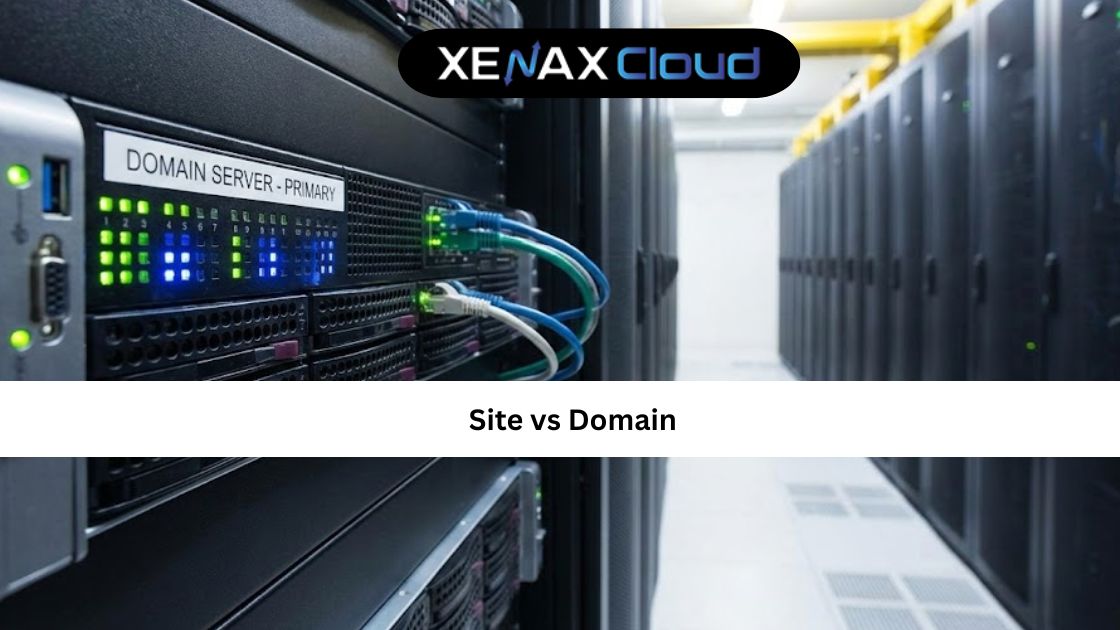
If you are building a website, one of the first questions you will encounter is site vs domain. Many beginners assume they are the same thing, but they serve very different purposes. Understanding this difference is essential whether you are launching a blog, an online store, or a global business platform.
Globally, millions of websites are created every year, yet confusion around site vs domain remains common. A domain gives your website an identity on the internet, while a site is the actual content people interact with. Choosing and managing both correctly impacts branding, performance, security, and long-term growth.
Indian hosting infrastructure has become a smart choice for global users because it combines cost-effectiveness, reliable connectivity, strong security standards, and easy scalability. When site and domain decisions are backed by the right hosting environment, businesses gain a strong foundation for success.
What Is a Domain Name?
To understand site vs domain, start with the domain. A domain name is the web address people type into a browser, such as example.com. It acts as a human-friendly shortcut to an IP address, which computers use to locate servers on the internet.
Domains are registered through domain registrars and are unique worldwide. Once registered, no one else can use the same name at the same time. A domain does not contain website files, images, or content. It simply points users to the server where the website is hosted.
From a business perspective, a domain represents brand identity. A clear, memorable domain builds trust and improves discoverability across global markets.
What Is a Website?
A website, or site, is the collection of files, pages, images, and databases that users see and interact with. It includes everything from text content and product listings to forms and dashboards.
In the site vs domain comparison, the site is the functional component. It lives on a server and is delivered to users through the internet when they access your domain. Without hosting, a website cannot be accessed publicly.
Websites vary widely in complexity. A simple personal site may contain only a few pages, while enterprise platforms may include thousands of pages, applications, and integrations.
Site vs Domain: The Core Difference Explained
The simplest way to understand site vs domain is to think of a domain as an address and a site as the building at that address. The domain tells visitors where to go, and the site provides what they see once they arrive.
You can own a domain without having a website. Many businesses register domains in advance and build their sites later. Similarly, you can build a site on a server without a domain, but it will only be accessible through an IP address, which is not practical for users.
This separation allows flexibility. You can change hosting providers without changing your domain, or redesign your site without altering your web address.
How Site and Domain Work Together
When someone enters a domain name into a browser, a DNS lookup translates that name into an IP address. The browser then connects to the server at that address and requests the website files.
This process highlights why hosting quality matters in the site vs domain relationship. A reliable server ensures fast response times, while a properly configured domain ensures accurate routing.
Indian servers are increasingly popular for this setup because they offer strong regional performance in Asia and competitive global speeds, making them suitable for international audiences.
How to Choose the Right Domain Name
Choosing a domain name requires both branding and technical consideration. Short, easy-to-remember names work best. Avoid complex spellings and unnecessary symbols.
From an SEO perspective, including relevant keywords can help, but branding should always come first. A strong brand name is easier to market globally.
When evaluating site vs domain decisions, always secure your domain before building the site. This prevents naming conflicts and protects your brand identity early.
How to Choose the Right Hosting for Your Site
Hosting determines where your site lives and how it performs. Shared hosting works well for small websites and beginners. VPS hosting offers more control and better performance for growing projects. Dedicated servers provide full resources for high-traffic platforms.
Indian hosting environments offer cost-effective scalability, which is especially useful for startups and agencies serving international clients. The right hosting ensures your site loads quickly and remains secure regardless of user location.
Speed, Uptime, and Security Considerations
In the site vs domain discussion, performance often gets overlooked. A domain alone does not guarantee speed. The server hosting your site plays a critical role.
Fast servers reduce page load times and improve user experience. Reliable uptime ensures your site remains accessible. Strong security protects both your site data and user information.
Indian data centers provide modern infrastructure with redundancy, compliance standards, and scalable resources, making them suitable for global websites.
Comparison: Indian Servers vs Other Regions
Below is a performance-focused comparison without pricing references.
| Factor | Indian Servers | US | Canada | Germany | UAE |
|---|---|---|---|---|---|
| Global Connectivity | Excellent | Excellent | Moderate | Excellent | Moderate |
| Latency Balance | Strong | Strong | Average | Strong | Average |
| Infrastructure Reliability | High | High | Moderate | High | Moderate |
| Scalability | Flexible | Flexible | Limited | Flexible | Limited |
This shows why Indian servers are increasingly chosen for global projects.
Real-World Use Cases of Site vs Domain Decisions
Startups often secure multiple domains to protect branding while launching a single site. This prevents competitors from using similar names.
E-commerce businesses separate domain strategy from site development to allow redesigns without losing traffic or SEO value.
Agencies manage dozens of domains pointing to different sites, hosted on scalable infrastructure to simplify maintenance.
Developers use temporary domains during development and switch to production domains once the site is ready.
Why Indian Servers Handle Global Websites Efficiently
Indian data centers are connected through high-capacity international networks. This ensures stable performance across regions.
Modern routing techniques and optimized infrastructure allow Indian servers to deliver competitive speeds worldwide.
For businesses managing multiple domains and sites, this reliability simplifies operations and supports international growth.
Scalability for Startups and Agencies
Scalability is critical in site vs domain planning. As traffic grows, hosting resources must expand without disrupting domain configuration.
VPS hosting allows seamless upgrades, while dedicated servers support enterprise-level requirements. Indian hosting environments support both models efficiently.
This flexibility helps startups grow into global brands without frequent migrations or downtime.
Best Hosting Plans Based on Site Requirements
For small websites, Shared Hosting Silver or Gold provides a stable starting point.
Growing projects benefit from VPS options such as KVM VPS 2 or KVM VPS 3, which offer better control and performance.
High-traffic platforms should consider dedicated servers for maximum reliability.
Most contextually relevant internal link used once naturally:
https://xenaxcloud.com/domain/
FAQs
What is the difference between Indian VPS and foreign VPS?
Indian VPS offers balanced global performance with scalable infrastructure.
Can Indian servers handle global website traffic?
Yes, they are designed for international connectivity and reliability.
Is Indian hosting cost-effective for international users?
Indian hosting delivers strong performance with predictable operating costs.
How reliable is XenaxCloud hosting?
XenaxCloud provides stable uptime, secure servers, and responsive support.
How to choose the right server for my business?
Choose based on audience location, growth plans, and technical needs.
Conclusion
Understanding site vs domain is essential for anyone building an online presence. A domain gives your brand an address, while a site delivers the experience users interact with. Both must work together seamlessly.
Indian hosting infrastructure offers a smart balance of cost, performance, security, and scalability. With XenaxCloud, businesses gain reliable hosting backed by a 15-day money-back guarantee.
If you are ready to build or scale your website, choose XenaxCloud for a strong, future-ready foundation.
The latest deals and offers are always available on the XenaxCloud Offers Page:
https://xenaxcloud.com/offers