Starting a hosting business does not always mean building your own data center or managing physical servers. VPS reselling gives agencies, developers, entrepreneurs, and hosting businesses a way to offer VPS-based services to their own customers.
The basic idea is simple. You obtain VPS resources from a hosting provider and sell hosting services to customers under your own business model. Your success depends on choosing suitable infrastructure, understanding resource requirements, providing reliable support, and managing customers efficiently.
For businesses operating from India and serving international customers, Indian hosting infrastructure can also be a practical foundation. Cost-effectiveness, strong connectivity across Asia, reliable infrastructure, security, and scalability can make it easier to start small and expand as customer demand increases.

What Is VPS Reselling?
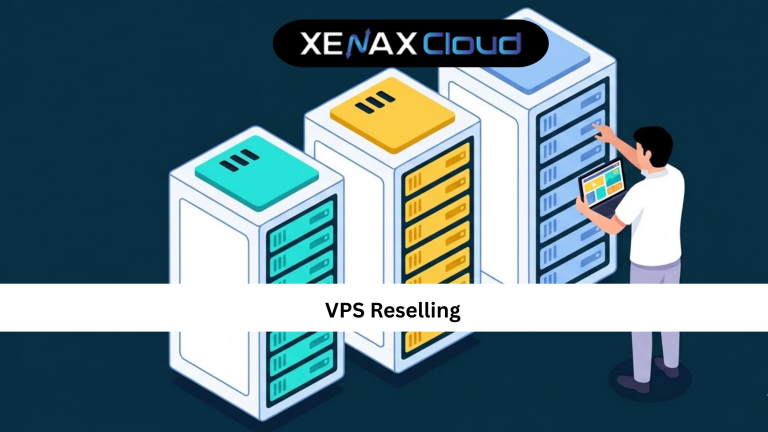
VPS reselling is a hosting business model where a company or individual purchases VPS resources and offers hosting services to its own customers.
Instead of building and maintaining physical data center infrastructure, the reseller works with an established hosting provider. The reseller can then package resources into plans that make sense for their target market.
For example, a web development agency could purchase VPS resources and use them to host websites for several clients. A hosting entrepreneur could create different packages based on CPU, RAM, storage, and bandwidth.
The important difference between VPS reselling and traditional reseller hosting is the level of control and resources available. VPS environments can provide more flexibility for applications and workloads, while traditional reseller hosting is often designed around hosting multiple customer websites through a control panel.
Before starting, always check the provider’s terms to confirm that the selected VPS service permits your intended resale model.
How Does VPS Reselling Work?
A typical VPS reselling guide follows a straightforward process.
First, the reseller chooses a VPS configuration based on expected customer demand. The resources might include multiple virtual CPU cores, RAM, storage, and bandwidth.
Next, the reseller creates their own service packages. For example, one package could target small business websites, while another could be designed for developers or resource-heavy applications.
The reseller then acquires customers, provisions their services, manages accounts, and provides support.
There are several ways to structure the business. Some resellers handle most technical tasks themselves, while others use management tools, automation, billing systems, and support processes to reduce manual work.
A good reseller should also plan for growth. Buying too many resources before acquiring customers can create unnecessary costs, while buying too little can make it difficult to handle customer demand.
VPS Reselling vs Traditional Reseller Hosting
Both models allow businesses to sell hosting services, but they work differently.
Traditional reseller hosting is usually easier for beginners because the provider manages much of the underlying server environment. It can be ideal for agencies that mainly need to host websites for clients.
VPS reselling can offer more control and flexibility. A reseller may be able to configure the server environment and create services around different workloads, depending on the provider’s terms and the reseller’s technical knowledge.
| Feature | Traditional Reseller Hosting | VPS Reselling |
|---|---|---|
| Server-level control | Limited | Greater |
| Resource flexibility | Moderate | Higher |
| Technical responsibility | Lower | Higher |
| Custom configurations | Limited | More flexible |
| Suitable for agencies | Yes | Yes |
| Scalability | Provider-dependent | Generally flexible |
| Management requirements | Lower | Higher |
For a beginner who mainly wants to host client websites, reseller hosting may be simpler. For someone with server administration skills and a more customized business model, VPS-based services may offer greater flexibility.
How to Choose the Right VPS for Reselling
Choosing the right infrastructure is one of the most important parts of VPS reselling.
Start by estimating how many customers you expect to serve and what type of workloads they will run. A VPS hosting websites with light traffic has very different requirements from one running databases, applications, or high-traffic stores.
Look at these resources carefully:
CPU
CPU determines the processing capacity available to your workloads. More demanding applications generally need more virtual CPU cores.
RAM
RAM affects how many processes and applications can run efficiently. Database-heavy websites and multiple applications can require significantly more memory.
Storage
Storage is needed for operating systems, websites, databases, logs, backups, and customer data. SSD-based storage can also improve application responsiveness.
Bandwidth
Bandwidth determines how much data can move between your VPS and its users. Customers serving images, videos, downloads, or high-traffic websites may need more bandwidth.
Network and Server Location
Choose infrastructure based on where your customers are located. Indian servers can be particularly useful for customers in India and Asia, while global connectivity remains important for international users.
Best XenaxCloud Plans for VPS Reselling
From the fixed plans supplied for this article, the Normal KVM VPS range is the most relevant starting point for a VPS-based business.
For a smaller operation, KVM VPS 1 provides:
2 Vcore CPU, 8GB RAM, 40GB Storage, 2TB Bandwidth — see current pricing
For a growing customer base, KVM VPS 2 provides:
4 Vcore CPU, 16GB RAM, 50GB Storage, 4TB Bandwidth — see current pricing
For heavier workloads, KVM VPS 3 provides:
8 Vcore CPU, 32GB RAM, 80GB Storage, 5TB Bandwidth — see current pricing
And for substantially larger requirements, KVM VPS 4 provides:
16 Vcore CPU, 64GB RAM, 100GB Storage, 10TB Bandwidth — see current pricing.
These specifications should be matched to actual customer workloads rather than selected simply because a larger plan has more resources.
For a business specifically looking for hosting services to resell, XenaxCloud’s Reseller Hosting option may also be worth evaluating alongside VPS infrastructure.
Most relevant internal link:
XenaxCloud Reseller Hosting
Speed, Uptime, and Security for Resellers
Customers expect their websites and applications to remain accessible. That makes infrastructure quality an important part of a reseller’s reputation.
A VPS provides an isolated virtual environment with allocated resources. However, server performance still depends on the underlying infrastructure, network, application configuration, and workload.
Security should be treated as part of the service rather than an afterthought. Resellers should use strong administrative credentials, appropriate firewall rules, regular updates, secure user permissions, and reliable backups.
If you are offering services to customers, also create a clear backup and recovery policy. Customers should know what is backed up, how frequently backups occur, and how recovery requests are handled.
Support matters too. A reseller may be technically capable of managing servers but still need a reliable provider when infrastructure-level issues occur.
Real-World Use Cases for VPS Reselling
VPS reselling can work particularly well for businesses that already have customers who need hosting.
Web Development Agencies
An agency can offer website hosting alongside development and maintenance services. This creates a single place for clients to manage their digital infrastructure.
Freelance Developers
Freelancers managing multiple client websites can package hosting as an additional service instead of sending customers to different providers.
Digital Marketing Agencies
Marketing agencies can provide landing-page hosting, campaign websites, and business website infrastructure as part of a broader service package.
Hosting Startups
Entrepreneurs can build their own hosting brand around carefully designed VPS packages, customer support, and billing systems.
Application Developers
Developers can offer managed environments for applications that require more control than standard shared hosting.
The key is to choose a niche. A reseller who understands the specific needs of their customers can create more useful packages than someone simply copying generic hosting plans.
Why Indian Servers Can Support Global Customers
Indian infrastructure can be particularly attractive for customers in India and nearby Asian markets because server proximity can help reduce network latency.
That does not mean an Indian server is automatically the fastest option for every visitor. A customer in Europe or North America may have a different network path and latency profile.
For global businesses, the decision should consider audience location, network quality, routing, reliability, security, support, and scalability together.
The supplied XenaxCloud brief specifically positions Indian infrastructure around cost-effectiveness, low latency in Asia with competitive global speed, security and reliability, and scalability for international businesses.
This combination can make India a sensible infrastructure location for resellers whose customer base includes both Indian and international businesses.
India vs Foreign Hosting Regions
The following comparison does not include pricing. Actual performance varies according to network routes, customer location, application architecture, and server configuration.
| Feature | India | USA | Canada | Germany | UAE |
|---|---|---|---|---|---|
| Performance for Asian Users | Excellent | Moderate | Moderate | Good | Excellent |
| Global Connectivity | Strong | Strong | Strong | Strong | Strong |
| 24/7 Technical Support | Available | Available | Available | Available | Available |
| Fast Provisioning | Available | Available | Available | Available | Available |
| Scalability | High | High | High | High | High |
| Reliability | High | High | High | High | High |
For a reseller focused on India and Asia, Indian infrastructure can provide a strong regional foundation while still allowing the business to serve customers in other markets.
Cheap Unmanaged VPS: Is It Worth It?
A cheap unmanaged VPS can look attractive when starting a hosting business because it may reduce infrastructure costs. However, price should not be the only consideration.
With unmanaged hosting, the reseller typically takes on more responsibility for operating system updates, security configuration, server software, troubleshooting, monitoring, and backups.
This can work well for someone with strong Linux and server administration skills. In fact, experienced developers may prefer an unmanaged environment because it gives them greater control.
But beginners should calculate the value of their time. If a server problem takes several hours to diagnose, the apparent saving from a low-cost VPS may not be worth it.
The best unmanaged VPS hosting option is therefore not necessarily the cheapest one. Look at CPU, RAM, storage, bandwidth, network quality, support boundaries, virtualization, and upgrade options before making a decision.
How to Build a Scalable Reselling Business
A successful VPS reselling business needs more than server resources. You also need a simple customer journey.
Start by defining your target customer. For example, you could focus on small businesses, developers, agencies, eCommerce owners, or application developers.
Then create a small number of understandable packages. Avoid offering too many confusing options at the beginning.
Automate repetitive tasks where possible. Billing, account provisioning, renewal reminders, support tickets, and usage monitoring can all reduce manual work as the customer base grows.
Keep enough capacity available for new customers, but avoid purchasing excessive resources before demand exists.
As your business grows, review CPU, RAM, storage, bandwidth, support requests, and customer retention. These numbers can tell you when it is time to upgrade infrastructure or introduce additional plans.
Common Mistakes in VPS Reselling
One of the biggest mistakes is reselling without understanding the provider’s terms. Always confirm that your intended resale activity is permitted.
Another mistake is promising unlimited resources without understanding the underlying infrastructure. Clear resource limits help prevent misunderstandings between you and your customers.
Some new resellers also focus entirely on price. Competing only on price can make it difficult to build a sustainable business.
Instead, focus on useful value such as reliable support, simple packages, responsive service, security practices, monitoring, and a clear refund or cancellation policy.
Finally, do not ignore technical support. If you sell hosting, customers will expect you to help when something goes wrong. Define what your support covers before you start accepting customers.
Frequently Asked Questions
What is VPS reselling?
Is VPS reselling profitable?
Is a cheap unmanaged VPS good for reselling?
What is the best unmanaged VPS hosting for resellers?
Can I resell VPS services from a hosting provider?
Is Indian VPS hosting good for international customers?
Conclusion
VPS reselling can be a practical way for agencies, developers, entrepreneurs, and hosting businesses to create their own hosting services without building physical infrastructure from scratch.
The key is to choose the right VPS resources, understand your customers, maintain strong security practices, provide dependable support, and scale infrastructure as demand increases. A cheap unmanaged VPS may suit experienced administrators, while a managed or reseller-focused service may be easier for beginners.
For a VPS-based business, XenaxCloud’s Normal KVM VPS plans provide different CPU, RAM, storage, and bandwidth configurations, including KVM VPS 1, KVM VPS 2, KVM VPS 3, and KVM VPS 4.
If your goal is specifically to sell hosting services to multiple customers, XenaxCloud’s reseller hosting option is also relevant.