Buy expired domains after checking their previous use, backlink quality, search history and renewal terms, rather than choosing a name only because it looks valuable. An expired domain is a web address whose registration was not renewed or was otherwise allowed to lapse. Its history can offer useful clues, but it does not guarantee rankings, traffic or SEO benefits.
For an Indian business owner, blogger or developer, an expired domain can provide a suitable brand name or a starting point for a website. However, a domain that previously hosted spam, unrelated content or manipulative links can create more work than buying a fresh name.
The safest approach is to investigate the domain before paying, understand the registrar’s purchase process and plan relevant content for its future use. The checks below help you distinguish a potentially useful domain from one whose past may make it unsuitable.
What Are Expired Domain Names?
Expired domain names are web addresses whose previous registration has ended and that may become available for renewal or registration, depending on the registrar and registry process. An expired domain is not necessarily available for immediate purchase.
A domain can expire because its owner forgot to renew it, stopped using it or deliberately allowed it to lapse. Many registrars provide a renewal grace period, followed in some cases by a redemption period or an auction process. The exact process depends on the domain extension and registrar.
This means a domain that appears expired in a third-party tool may still belong to its previous registrant. It might be listed at auction, held during a recovery period or already acquired by another buyer.
Before trying to buy expired domains, distinguish between these terms:
- Expired domain: A domain whose registration period has ended, although it may not be available to the public.
- Auction domain: A domain offered through an auction process, sometimes before it becomes generally available.
- Dropped domain: A domain that has completed the relevant expiration process and returned to availability under registry rules.
- Aged domain: A domain registered in the past. Age alone does not establish quality or SEO value.
- Backlink: A link from another website pointing to the domain or a page on it.
A domain’s age and previous ownership can be useful research clues, but neither proves that the domain has valuable links, genuine visitors or a clean history.
How to Buy Expired Domains Safely
To buy expired domains safely, shortlist candidates, investigate their history, review backlinks, verify availability and confirm the purchase terms before placing an order.
- Define the topic, audience and domain extension you need.
- Find candidates through registrar auctions or domain research tools.
- Inspect archived pages and previous website topics.
- Review backlinks, referring domains and suspicious anchor text.
- Check trademark conflicts, reputation and potential brand confusion.
- Confirm availability, auction status and registration terms.
- Register the selected domain through a reputable registrar and secure the account.
Do not rely on a single score from an expired-domain marketplace. Metrics such as Domain Authority and Domain Rating are third-party estimates, not Google ranking scores. A domain can have strong-looking metrics but still possess irrelevant, manipulated or low-quality links.
A useful shortlist should include the domain name, extension, former subject, relevant referring websites, archive findings, trademark concerns and the purchase process. Keeping these details together makes it easier to compare candidates objectively.
How Can You Check Expired Domain SEO Value?
Expired domain SEO value depends on the relevance and quality of a domain’s history, backlinks and previous content, not simply its registration age or a third-party authority score.
Start by checking whether the former website covered the subject you intend to publish. A domain previously used for a legitimate technology blog may be relevant to a new technology publication, while a domain formerly used for unrelated gambling or doorway pages may be a poor fit.
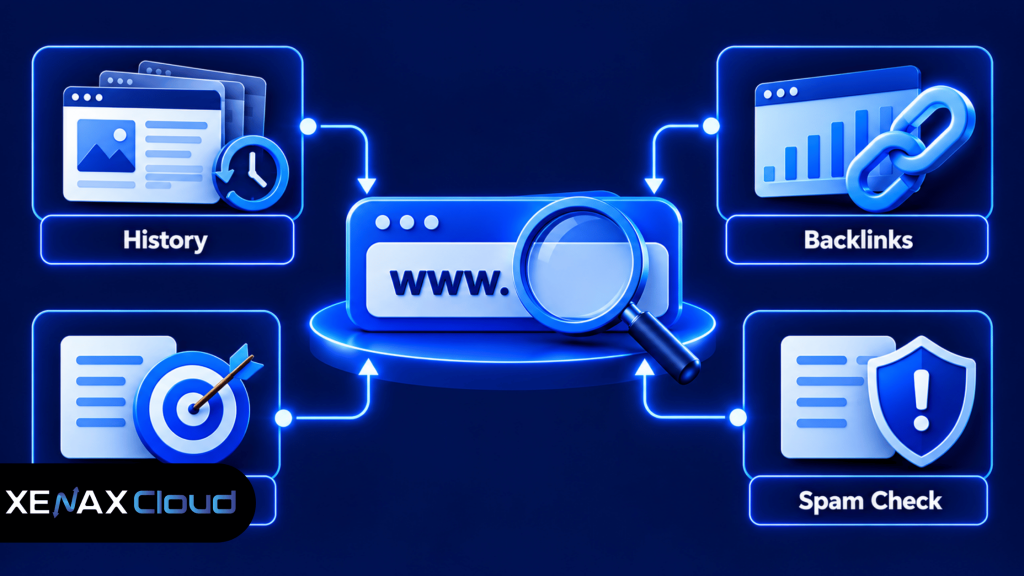
A practical evaluation should cover four areas:
- Historical content: Use the Internet Archive’s Wayback Machine to inspect snapshots of the former website. Look for abrupt topic changes, thin pages, copied content or repeated redirects.
- Backlink relevance: Review which websites link to the domain and why. Links from genuine, topically relevant editorial pages are more informative than a large count of unrelated links.
- Anchor text: Check the words used in links pointing to the domain. Repeated commercial phrases, unrelated languages or suspiciously repetitive anchors can indicate manipulation.
- Index and reputation signals: Search for the domain name and former brand, inspect available search results, and investigate signs of malware, impersonation or past abuse.
The Internet Archive’s Wayback Machine helps reveal historical pages, but its records may be incomplete. Missing snapshots do not prove that a domain was clean, and a saved page does not confirm that the website performed well in search.
Also check whether important backlinks still exist and point to the expected URLs. Some may have disappeared, lead to removed pages or be redirected elsewhere. Do not assume every link will continue to provide value after a new owner takes over.
Which Expired Domains Are Worth Buying?
An expired domain is worth considering when its name suits your project, its history is credible, its links are relevant and its purchase terms fit your requirements. No single metric can establish that a domain is a good investment.
Use this comparison to separate promising candidates from risky ones.
| Check | More promising signal | Warning signal |
| Previous content | Consistent, relevant subject | Repeated unrelated topic changes |
| Backlinks | Genuine editorial links from relevant sites | Spam networks or manipulative patterns |
| Anchor text | Natural references to the brand or topic | Repetitive commercial keywords |
| Website history | Credible pages and clear purpose | Doorway pages, scraped content or redirects |
| Brand and legal checks | No obvious conflicts | Trademark or impersonation risk |
| Registration status | Clear purchase process | Unclear ownership or disputed auction |
A useful domain does not need the largest backlink count. A smaller number of genuine, relevant references can be more meaningful than thousands of links from unrelated or low-quality pages.
The domain must also fit the business plan. If you intend to build a local service website, a memorable name that matches the service and audience may be more useful than an unrelated domain with impressive third-party metrics.
For a new project, decide what the domain will become before purchasing it. A clear plan for relevant pages, audience needs and brand identity is a better starting point than buying a name simply because a tool labels it valuable.
Is Expired Domain SEO Safe?
Expired domain SEO can be legitimate when a domain is used for a relevant, useful website, but buying an expired domain mainly to manipulate search rankings can violate Google’s spam policies.
Google identifies expired domain abuse as using an expired domain and repurposing it primarily to manipulate search rankings by hosting content that provides little or no value to users. For example, acquiring a former medical information website and filling it with unrelated commercial pages solely to exploit its past signals can create a serious policy risk.
A more defensible approach is to build a site that has a clear reason to exist on that domain. Relevant content, a consistent subject and useful information for the intended audience should drive the project. Historical backlinks should not be the sole reason for purchasing the name.
Before launching the site, check Google’s guidance on spam policies for Google web search. This is the primary source for understanding how Google describes expired domain abuse and other practices that may affect search visibility.
Keep these distinctions in mind:
- Domain age does not guarantee better rankings.
- Backlinks do not guarantee that a new website will inherit the former site’s search performance.
- A domain’s old reputation does not replace useful, original content.
- Redirects should serve a genuine user or migration purpose, not mislead search engines about relevance.
If your goal is to revive a former publication, first understand what the previous site covered and whether you can produce a credible continuation. If the domain’s history conflicts with the new project, choosing another name may be the safer decision.
How Do You Choose a Domain Registrar?
A domain registrar is a service authorised to register domain names through the relevant registry, and the registrar’s policies determine the purchase, management and renewal process for its customers.
Before buying, check the extension you want, the domain’s availability, registration requirements, account security options and the renewal terms. Some expired domains are sold through auctions, so the displayed listing may not represent a standard new registration.
Compare the renewal price with the first-year price before deciding. Also review transfer rules, domain-lock options, account recovery procedures and whether the registrar supports the DNS records your website requires.
For an Indian business, convenient payment methods and support availability may also matter. Xenax Cloud offers domain registration for extensions including .com, .org, .net, .xyz and .online. You can review the available options through its domain registration service.
Domain registration and web hosting are separate services. Registering a domain gives you control over the name under the registration agreement; hosting provides the server resources that serve your website. You may use different providers for these services, provided you configure the domain’s DNS correctly.
If you are purchasing a domain through an auction, read the auction’s rules before bidding. Confirm whether the seller is transferring an existing registration or whether the domain must complete a registry release process before it can be registered.
Worked Example: Choosing an Expired Domain for an Indian Business
Consider a Jaipur-based digital marketing agency planning a website that publishes practical content about SEO and website management. The agency finds two expired domain names that appear suitable and needs to decide which deserves further investigation.
Candidate A previously hosted a small website about digital publishing. Its archived pages show a consistent topic, and several identifiable industry websites link to useful articles. Candidate B has a larger backlink count, but its history includes unrelated topics, repetitive commercial anchors and abrupt changes in content.
Candidate A is the stronger candidate for further review because its past subject aligns with the proposed publication and its links have a clearer context. Candidate B’s larger backlink count does not outweigh the warning signs. Neither domain should be purchased until ownership, trademark concerns, current link status and registration terms are checked.
The agency should then apply a practical decision rule:
- Consider buying if the domain has a relevant history, credible links, no apparent brand conflict and a clear content plan.
- Investigate further if the archive is incomplete, links are difficult to verify or ownership status is unclear.
- Reject the candidate if there are serious spam indicators, legal conflicts or no defensible connection between the old domain and the planned site.
If the agency decides to proceed, it can register the chosen name and publish useful, original pages that serve its audience. It should not expect immediate search rankings or assume the previous website’s traffic will return.
The recommended approach is not suitable for a buyer who needs a guaranteed source of search traffic or cannot investigate the domain’s past. In that situation, registering a fresh, brand-appropriate domain and building a site around useful content may be the better choice.
What Should You Do After Buying an Expired Domain?
After buying an expired domain, secure the registrar account, configure DNS correctly and publish content that matches the website’s intended purpose. A successful registration does not automatically restore the former website or its search performance.
Use this post-purchase checklist:
- Enable multifactor authentication where available and protect the account recovery details.
- Confirm that the domain is registered to the correct account and that contact details are accurate.
- Review existing DNS records before changing nameservers or connecting hosting.
- Check for unexpected redirects, suspicious scripts and unrecognised services if you are restoring an old website.
- Publish relevant pages with original content and clear navigation.
- Monitor indexing, crawl errors, referral traffic and security alerts after launch.
If you are taking over an existing website, create a backup before replacing files or changing its configuration. Inspect any files you intend to restore, because old website archives may contain outdated software or unsafe code.
Do not redirect every old URL to the homepage without reviewing its purpose. If a former page has a genuinely relevant replacement, a carefully chosen redirect may help visitors reach the right information. If there is no meaningful replacement, do not create a misleading redirect just to preserve an SEO signal.
Buy Expired Domains: FAQs
Can I buy expired domains that are not available for registration yet?
Yes, you may be able to acquire an expired domain through a registrar’s auction or recovery process before it becomes generally available. The exact options depend on the registrar, registry and domain status. Confirm the current ownership and auction rules before paying or placing a bid.
Do expired domain names automatically rank higher on Google?
No, expired domain names do not automatically rank higher on Google. Their age and previous backlinks do not guarantee that a new website will inherit old rankings or traffic. Search performance depends on many factors, including relevance, useful content, technical accessibility and compliance with search spam policies.
How can I check expired domain SEO value?
Check expired domain SEO value by reviewing archived pages, backlink sources, anchor text, previous topics and suspicious redirects. Use more than one source because archive records and backlink databases can be incomplete. Treat third-party authority scores as comparative estimates, not as proof that a domain will rank.
Is it safe to buy an expired domain with backlinks?
Yes, buying an expired domain with backlinks can be reasonable if the links are genuine, relevant and supported by a credible history. Investigate suspicious link patterns, removed pages and trademark concerns first. Backlinks alone do not justify the purchase, and manipulative repurposing can create search-policy risks.
Should I buy an expired domain or register a new one?
Choose an expired domain if its history, name and relevant references suit your project and you can verify its ownership. Choose a new domain if you want a clean starting point, cannot confirm the former site’s history or find no meaningful connection between the old name and your planned website.
Can I use an expired domain for a different business?
Yes, but the new use should have a genuine purpose and must not mislead visitors or search engines. A major topic change may make old backlinks less relevant, and repurposing a domain mainly to manipulate rankings can violate Google’s spam policies. Review the former site and any brand or trademark risks first.
What should I check before paying for an expired domain?
Before paying, confirm the domain’s availability or auction status, archived content, backlink quality, ownership process, trademark concerns and renewal terms. Check whether the domain is being transferred or released for new registration. Keep records of the listing and purchase conditions, and secure the registrar account after acquisition.
Choose an expired domain only after its history, backlinks and intended use have passed review. If the name and extension fit your project, compare the registration and renewal terms through Xenax Cloud’s domain registration service; otherwise, choose a new domain and build its reputation through useful content.