Premium domain names are previously registered website addresses that are offered for resale because of their perceived market value. They may be short, memorable, brandable or closely related to a popular industry or keyword. Businesses consider them when they want a distinctive online identity, but a higher asking price does not automatically mean a domain is worth buying.
Choosing a domain is a long-term branding decision. The address may appear on your website, business cards, invoices, advertisements, email signatures and social media profiles.
Before you buy premium domain names, understand how sellers determine their asking prices, how ownership transfers work and what ongoing renewal obligations you will have. These checks help you avoid paying for a name that does not suit your business.
What are premium domain names?
Premium domain names are registered domains that their current owners or domain registries offer at a higher-than-standard price because of their perceived demand or value.
A domain name is a human-readable website address that directs visitors to an internet resource. For example, a business might use a short brand name followed by an extension such as .com.
There are two common situations involving premium domains:
- Resale domains: A person or business already owns the domain and offers it to another buyer.
- Registry premium domains: A domain registry classifies a particular name as premium and sets special registration or renewal terms.
The distinction matters because the buying process and ongoing costs can differ. A resale domain involves a transaction with its current owner, while a registry premium domain may be available through a registrar under special pricing conditions.
A domain can be considered premium for several reasons:
- It is short and easy to remember.
- It contains a common word or relevant industry term.
- It matches a recognised brand name.
- It is easy to pronounce and spell.
- It has existing recognition or established online history.
- It is relevant to a business category with strong demand.
However, the word premium is not a guarantee of quality. A domain seller may set a high asking price based on personal expectations rather than proven market demand.
A business should therefore evaluate the name itself, its intended use and the conditions attached to ownership before making a decision.
What makes premium domain value higher?
Premium domain value depends on memorability, commercial relevance, extension, existing demand and the availability of comparable sales evidence.
A domain’s value is not determined by its length alone. A short name can still be confusing, difficult to pronounce or unrelated to the business buying it.
The following factors help explain why some domain names attract higher asking prices.
1. Length and memorability
Short domains are often easier to type, remember and share. A name with simple spelling may also reduce mistakes when customers enter it into a browser or search for the business.
However, a short combination of unrelated letters may be less useful than a slightly longer name that clearly communicates the brand.
2. Keyword relevance
A domain containing a relevant industry term may communicate the website’s subject quickly. For example, a name associated with a specific service can be useful to a business operating in that category.
Keyword relevance alone does not guarantee search engine rankings. Search visibility also depends on website content, technical quality, relevance and other factors.
3. Brand potential
A brandable domain is a name that can represent a business or product identity. It should be distinctive enough to recognise and simple enough to communicate verbally.
Before buying, check whether the name creates confusion with an existing business or registered trademark.
4. Extension and audience
The domain extension is the ending of a domain name, such as .com, .org or .net. Some extensions are more familiar to particular audiences, while others may better match the purpose of a website.
For an Indian business targeting a broad audience, consider whether customers are likely to recognise and trust the chosen extension.
5. Existing domain history
A previously used domain may have backlinks, indexed pages or an established reputation. It may also have a history of spam, misleading content or search engine penalties.
Do not assume that an older domain automatically provides an SEO advantage. Review its previous use and available history before purchasing it.
How to evaluate a premium domain before buying
You can evaluate a premium domain by checking its relevance, ownership, history, extension, trademark risks and total ownership conditions.
A domain purchase should begin with a clear business requirement. Write down the name you want, the audience you serve and the extension that makes sense for your website before comparing available options.
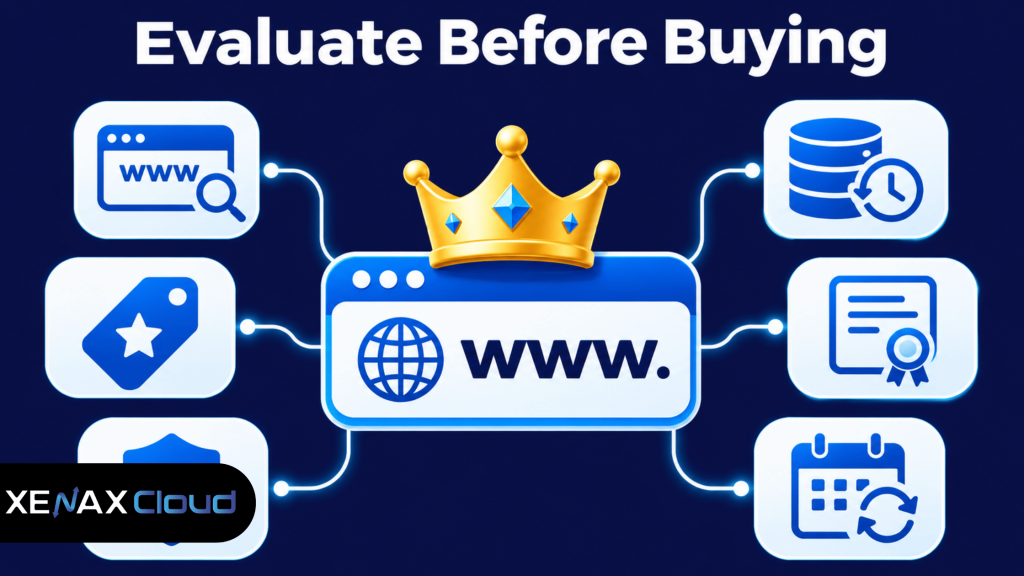
Use this checklist to evaluate the domain:
| Check | What to examine | Why it matters |
| Brand relevance | Name matches your business | Supports recognition |
| Spelling | Easy to pronounce and type | Reduces typing errors |
| Ownership | Seller can transfer control | Prevents ownership disputes |
| Domain history | Previous use and reputation | Identifies potential risks |
| Trademark | Similar registered names | Reduces legal conflicts |
| Renewal terms | Future renewal conditions | Helps plan ongoing ownership |
A domain’s asking price should also be compared with evidence rather than accepted at face value. Look for comparable domain sales with similar extensions, length, keyword relevance and commercial use.
For a domain that has already been registered, verify the seller’s authority to sell it. Use reliable transaction arrangements and confirm that the domain can be transferred to an account under your control.
You can also check domain registration information through the ICANN Lookup service. The information available depends on the domain extension and applicable privacy rules, so a lookup result may not display the owner’s personal details.
How to buy premium domain names safely
To buy premium domain names safely, verify the seller, confirm the transfer process and secure control of the domain before using it for business.
A domain purchase involves more than receiving a website address. The buyer needs to obtain control through the registrar or domain management account and confirm that the registration details are correct.
Follow these steps:
- Identify the domain that matches your business name and audience.
- Research its registration history and previous use.
- Verify the seller’s ownership and authority to transfer it.
- Compare its asking terms with similar domain sales.
- Confirm the transfer process and any applicable restrictions.
- Complete the transaction through a secure arrangement.
- Check the domain’s registration and renewal details after transfer.
Verify the seller and ownership
A seller should be able to demonstrate control over the domain. If the domain is being sold through a marketplace or broker, understand the role of each party and the transaction process.
Avoid sending payment based only on screenshots or informal messages. Confirm that the domain is transferable and that the seller can complete the required registrar-side steps.
Understand the transfer process
A domain transfer is the process of moving a domain’s management from one registrar to another. Some transactions can be completed through an account push at the same registrar, while others require an authorisation code and compliance with registrar rules.
Ask the seller which method will be used. Check whether any transfer lock, recent registration change or other restriction could delay the transaction.
Secure the domain after purchase
Once the domain is under your control, update the account password and enable two-factor authentication if supported. Two-factor authentication is an account security method that requires an additional verification step beyond a password.
Also check the registrant contact details, renewal settings and recovery email address. These details matter because losing access to the domain account can interrupt your website and business email.
Buy premium domain: What should you check before paying?
When you buy premium domain names, check the total transaction terms, renewal conditions, seller identity and transfer requirements before sending payment.
The advertised asking amount is not the only detail that matters. A domain may have special renewal conditions, marketplace fees, broker charges or transfer restrictions that affect the total cost of ownership.
Consider these points before proceeding:
- Initial purchase terms: Confirm exactly what the seller is offering.
- Renewal terms: Ask what the domain will cost to renew after the initial registration period.
- Transfer conditions: Confirm whether the domain can be transferred immediately.
- Marketplace fees: Check whether a broker or marketplace adds a separate charge.
- Registration period: Confirm the domain’s current expiry date and registration status.
- Trademark concerns: Check whether the name could conflict with another organisation’s rights.
One common mistake is comparing only the first-year registration amount. Renewal conditions can be different, particularly for registry premium domains, so compare the renewal price with the first-year price before committing.
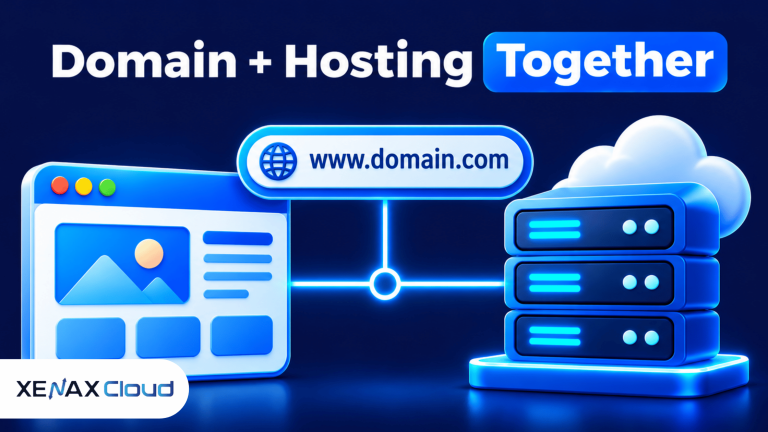
Another mistake is assuming that buying a domain automatically gives you a website. A domain name and web hosting are separate services. The domain provides the address, while hosting stores the website files and makes the site accessible online.
Xenax Cloud provides domain registration services for extensions including .com, .org, .net, .com.in, .xyz and .online. Check the available extension, registration conditions and renewal terms before placing an order.
If you also need website storage, compare the available web hosting plans separately. Your domain and hosting can work together, but they serve different purposes.
Worked example: Choosing a premium domain for an Indian business
An Indian business should choose a premium domain only when its branding benefits justify the purchase conditions and ongoing ownership responsibilities.
Consider a Jaipur-based digital marketing agency that wants to expand beyond local clients. The agency has shortlisted a short, brandable .com domain that matches its preferred business identity.
The owner has three practical requirements:
- The domain should be easy for clients to remember and type.
- It should be suitable for email addresses and a company website.
- It should remain relevant if the agency adds new services.
The agency finds two possible names. The first is a short, memorable name that matches the agency’s brand. The second is a longer name containing a popular marketing keyword but is harder to pronounce.
The first domain may be more suitable for long-term branding, provided the asking terms, ownership and trademark checks are satisfactory. The second may communicate the business category more directly, but keyword inclusion alone does not make it more valuable.
Before buying, the agency should compare similar domain sales, check the domain’s previous use, verify the seller’s control and confirm renewal conditions. If the domain has an unclear ownership history or a possible trademark conflict, the owner should avoid proceeding until the issue is resolved.
Once the domain is secured, the agency can connect it to a website hosting account, configure DNS records and create business email addresses. For a new website, the hosting choice should be based on its platform, expected traffic and storage requirements rather than the domain’s purchase value.
This example shows why a premium domain should be treated as a business asset that needs evaluation, not simply an expensive website address.
Which premium domain should you choose?
Choose a premium domain based on your brand identity, intended audience, extension and ability to maintain ownership over time.
Use these decision rules:
- Choose a short brandable domain if customers need to remember and share your business name.
- Choose a keyword-relevant domain if the term clearly describes your business and does not create an awkward name.
- Choose a familiar extension if your audience expects a recognised extension such as .com.
- Choose a previously owned domain only after checking its history, seller authority and transfer conditions.
- Avoid a domain if its trademark status, ownership or renewal terms are unclear.
A premium domain is not the right choice if it consumes your branding budget without providing a clear business advantage. In that situation, choose an available, distinctive domain with suitable spelling and extension instead.
Xenax Cloud provides domain registration services with billing in Indian rupees and payment options that include UPI, cards and net banking through supported Indian gateways. Support is available around the clock for hosting and domain-related assistance.
For additional guidance, read [ARTICLE LINK: how to choose the right domain name for your business] and [ARTICLE LINK: domain registration and renewal explained].
Premium domain names: FAQs
Are premium domain names worth buying?
Premium domain names can be worth buying when they provide clear branding, memorability or business relevance. Their value depends on the buyer’s needs and the evidence supporting the asking terms. Compare similar sales, check ownership and renewal conditions, and avoid paying extra simply because a seller labels a domain premium.
How do I know if a premium domain is valuable?
A premium domain’s value can be assessed through comparable sales, brand relevance, memorability, extension and existing demand. Check whether the name is easy to spell and suitable for your audience. A high asking amount alone is not proof of market value, so compare evidence before making a purchase.
Can I buy a premium domain that is already registered?
Yes, you can buy a registered premium domain if its current owner agrees to sell it and can transfer control. Verify the seller’s authority, confirm the registrar’s transfer procedure and use a secure transaction process. After completion, check that the domain appears under your own account.
Does a premium domain improve Google rankings?
No, buying a premium domain does not automatically improve Google rankings. Search visibility depends on relevant content, website quality, technical accessibility and other ranking signals. A memorable domain may support branding and direct visits, but it cannot replace useful pages and a well-maintained website.
What is the difference between a premium domain and a normal domain?
A premium domain is offered at special pricing because of perceived demand or market value, while a standard domain is generally available under ordinary registration terms. Premium domains may be resale listings or registry-classified names. Always check renewal conditions because they can differ from standard registration.
Can I use a premium domain with any hosting provider?
Yes, a premium domain can generally be connected to a compatible hosting provider by configuring its DNS records. You do not have to buy the domain and hosting from the same company. Confirm that you control the domain’s nameservers or DNS settings before connecting the website.
What should I check before renewing a premium domain?
Check the renewal amount, expiry date, registrar account access and automatic renewal settings before the domain expires. Registry premium domains may have different renewal conditions from standard registrations. Keep the registrant email current and enable account security features to reduce the risk of losing control.
Before ordering a domain through Xenax Cloud, shortlist a name, confirm its extension and check the renewal conditions alongside the registration terms. Choose a domain that fits your business identity and that you can maintain over the long term.