
Domain name ideas for business websites should reflect what a company does, who it serves or the identity it wants customers to remember. A suitable domain is short, easy to spell and relevant to the brand, while leaving room for the business to expand its products or services.
Choosing a domain is not just a naming exercise. The address appears on business cards, invoices, email signatures, search results and social profiles, so a confusing name can make it harder for customers to find and recognise the business.
The following sections explain naming approaches, examples by business type, domain extensions, availability checks and the registration process.
What Makes a Good Business Domain Name?
A good business domain name is a readable website address that customers can remember, type and associate with your brand. It should communicate the business identity without restricting the company to a product or location it may outgrow.
Use these qualities when assessing a name:
- Short: Prefer a compact name that is easy to type and share.
- Memorable: Choose familiar words or a distinctive brand combination.
- Easy to spell: Avoid unusual spellings that customers may mishear or mistype.
- Relevant: Connect the name with the business, audience or brand identity.
- Flexible: Avoid wording that becomes inaccurate if the business expands.
- Distinctive: Check that the name is not easily confused with an established business.
A descriptive domain can tell visitors what a company offers. A brandable domain may be less literal but can create a distinct identity that works across several products or services.
For example, a bakery could use a name built around baking, bread or its brand identity. If the same business later adds catering or packaged products, a domain that refers only to one item may become restrictive.
The best domain name ideas for business are easy to pronounce, relevant to the brand and flexible enough to support future growth.
Domain Name Ideas for Business by Industry
Domain name ideas for business websites are easier to develop when you start with the industry, customer and main service. A useful first step is to write down the words customers already associate with the business, then combine them with a brand name or a clear descriptive term.
Here are illustrative naming directions across different business categories:
| Business type | Naming direction | Illustrative example |
| Bakery | Product or craft | ovenandcrumb.com |
| Digital agency | Creative service | pixelcraftstudio.com |
| Clothing store | Fashion or brand identity | threadandtone.com |
| Fitness studio | Activity or community | formandmotion.com |
| Accounting firm | Professional service | clearledger.com |
These examples are naming ideas, not confirmation that the domains are available. Search the exact spelling and extension through a registrar before adopting any example.
A local business can include a city or neighbourhood if its services are closely tied to that area. However, avoid adding a location if the company expects to serve customers across India or enter other markets later.
An online store may prefer a broad brand name rather than a domain limited to one product category. This allows the business to add new collections without making the website address misleading.
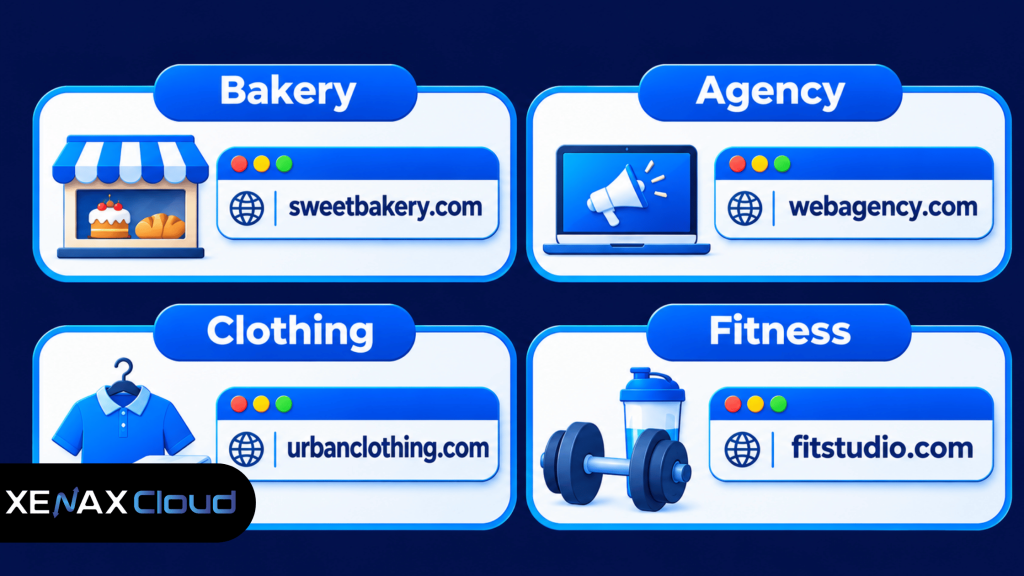
Use the examples as creative starting points rather than names to copy. Before choosing one, check pronunciation, spelling, brand similarity and the availability of matching social media usernames.
How to Choose a Business Domain Name?
To choose a business domain name, define the brand identity, create several naming options, test them with potential customers and check availability. This process helps you avoid selecting an address that is difficult to remember or unsuitable for future business plans.
Follow these steps:
- Describe the business in a few clear words.
- List words connected to your products, services and audience.
- Combine relevant words with your brand or a distinctive term.
- Shortlist names that are easy to read and pronounce.
- Check spelling, brand conflicts and domain availability.
- Compare suitable extensions and their renewal terms.
- Register the selected domain using accurate account details.
Start by writing down what the company does and what customers should remember. For example, an accounting service might focus on words such as accounts, ledger, tax, books or finance.
Next, test the shortlisted names aloud. Ask someone to hear the name once and type it without seeing it written down. If they repeatedly misspell it, simplify the name or select a clearer combination.
Check the name across the places where customers may encounter the brand. A matching domain and social username can make the business easier to recognise, although exact username availability must be checked separately on each platform.
Which Domain Extension Should a Business Choose?
A domain extension is the final part of a web address, such as .com, .org or .net. The extension should suit the website’s purpose, audience expectations and brand identity rather than being selected only because it is familiar.
Consider these common options:
| Extension | Common association | Possible fit |
| .com | Commercial and general business use | Company websites and online stores |
| .org | Organisations and communities | Associations and public-interest projects |
| .net | Network and technology associations | Technology services and general websites |
| .xyz | General-purpose, modern naming | Startups and brand-led projects |
| .online | Online services and web presence | Digital businesses and online platforms |
These are common associations, not strict restrictions on what a website can publish. Check the registrar’s current registration requirements for the extension you want.
For many businesses, .com is a familiar choice, but the name itself still matters. A clear brand name with another suitable extension may be easier to remember than a long or awkward .com address.
Do not select an extension based on an assumption that it will automatically improve search rankings. Google’s search documentation explains that generic top-level domains are generally treated alike for ranking purposes. The relevance and usefulness of the website’s content matter more than choosing one generic extension over another. See Google’s SEO Starter Guide.
How to Check Whether a Business Domain Name Is Available
You can check a business domain name through a registrar’s search tool by entering the exact name and selecting the extension. The result tells you whether the domain can be registered through that provider at the time of the search.
A domain that does not open in a browser is not necessarily available. Its owner may have registered it without publishing a website, so always use a registrar’s availability result rather than relying on a browser search.
Before registering, check the following:
- Exact spelling: Search the intended name carefully, including hyphens if used.
- Alternative extensions: Check whether a suitable extension is available if your first choice is taken.
- Existing brands: Search for businesses using similar names in the same industry.
- Trademark concerns: Check relevant trademark records and seek professional advice if the name is close to an existing mark.
- Renewal terms: Compare the renewal price with the first-year registration price.
- Account ownership: Use accurate registrant details and an email address you can access.
A domain registration does not automatically grant trademark rights over the name. Domain availability and legal permission to use a brand are separate matters, so investigate possible conflicts before investing in signage, packaging or advertising.
Xenax Cloud provides domain registration services for extensions including .com, .org, .net, .xyz and .online, among others. Search the exact business name and review the registration and renewal terms shown before completing the order.
When comparing domain name ideas for business, remember that registering a domain and purchasing web hosting are two separate steps. Read about the difference between a domain and hosting and learn how to check DNS records using the nslookup command for DNS troubleshooting before connecting your new business domain to a website.
Worked Example: Choosing a Domain for a Jaipur Clothing Business
A clothing business in Jaipur selling ethnic wear and contemporary outfits needs a domain that can represent both product categories. A name restricted to one garment type could become unsuitable if the store later adds accessories, occasion wear or other collections.
Suppose the owner considers three illustrative options:
| Name idea | Strength | Limitation |
| jaipurkurti.com | Clearly describes a local product focus | Restricts the perceived range to kurtis |
| rangandthread.com | Brand-led and suitable for several clothing categories | Requires brand recognition to explain the business |
| ethnicwearjaipur.com | Communicates product category and location | Less flexible if the business expands beyond ethnic wear |
These are examples only; availability and brand conflicts have not been checked.
For this business, rangandthread.com is the more flexible naming direction if the owner wants a brand that can cover several clothing categories. The first option is more suitable only if the business intends to remain focused on kurtis and local search identity is central to its plan.
Use this decision rule:
- Choose a descriptive name if the business serves one clearly defined product or service category.
- Choose a brand-led name if you expect to add products, services or locations.
- Include a location if the business depends mainly on customers from that area.
- Avoid narrow product wording if your planned catalogue is likely to expand.
- Do not register yet if a similar established brand could create customer confusion or a legal dispute.
Before ordering, the owner should check the chosen name through a registrar, investigate similar business names and compare renewal terms. The business should also secure matching social handles where possible and use the same spelling across its website, email and marketing materials.
What Mistakes Should You Avoid When Naming a Business Domain?
The most common domain naming mistakes are choosing a difficult spelling, copying another brand, adding unnecessary keywords and ignoring renewal conditions. A name may look suitable in a brainstorming document but become inconvenient when customers need to type or remember it.
Avoid these problems:
- Too many words: Long addresses are harder to type and share accurately.
- Unnecessary hyphens: Hyphens can make a name harder to communicate verbally.
- Trendy spellings: Replacing familiar letters may cause repeated spelling errors.
- Keyword stuffing: Adding several search terms can make the name look unnatural.
- Unclear abbreviations: Customers may not understand shortened words or initials.
- Ignoring legal checks: A domain being available does not mean its use cannot conflict with another brand.
- Overlooking renewal: A domain can expire if renewal is missed or payment details are outdated.
Another mistake is choosing a name only because a particular extension is available. The business identity should come first; then compare suitable extensions and decide which address customers can recognise most easily.
Keep control of the registrar account after registration. Use a unique password, maintain access to the registered email address and enable available account security features. Record the expiry date and review renewal settings so that the domain does not lapse unexpectedly.
Domain Name Ideas for Business: FAQs
How do I come up with a unique business domain name?
Start with words describing your business, audience and brand personality, then combine them into short, pronounceable names. Create several alternatives instead of relying on one idea. Check domain availability, similar businesses and relevant trademark records before selecting a name for registration.
Should my business domain name include keywords?
A business domain name can include a relevant keyword if it reads naturally and accurately describes the company. However, adding search terms does not guarantee higher rankings. A distinctive, memorable brand name is often more flexible if the business plans to expand its products or services.
Is a .com domain better for a business?
A .com domain is a familiar option for many commercial websites, but it is not automatically better for every business. Consider the brand name, audience expectations and availability of suitable alternatives. Choose an address that is clear and consistent with the company’s identity.
Can I change my business domain name later?
Yes, you can move a website to a new domain, but the change requires careful preparation. Set up redirects from old URLs, update internal links and email settings, and verify the new domain in Google Search Console. Keep control of the old domain during the transition where possible.
Should I register more than one domain extension?
Registering additional extensions can help protect a brand when the names are relevant and available. However, each registration creates renewal and management responsibilities. Prioritise the main domain first, then consider alternatives that customers might reasonably type or associate with your business.
What should I check before buying a business domain name?
Check exact spelling, availability, brand conflicts, registration requirements and renewal terms before purchasing. Use accurate registrant details and keep access to the registrar account. Compare the renewal price with the first-year registration price so that ongoing ownership costs are not overlooked.
A business that needs a domain for a new website should first shortlist a brand name, check its availability and compare suitable extensions. Xenax Cloud’s domain registration service lets you search available extensions; select the domain that fits your long-term brand identity and review its renewal terms before ordering.