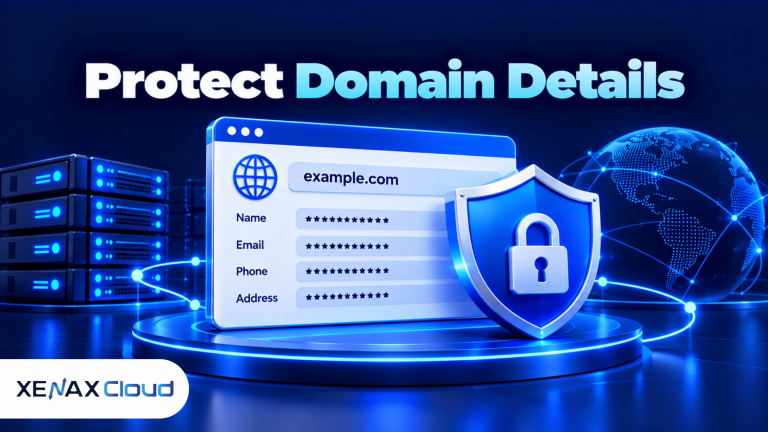
Domain privacy protection is a service that limits how much of a domain owner’s personal contact information appears in public registration records. It is commonly provided through WHOIS privacy or related registration-data privacy services. For Indian individuals and businesses, availability depends on the domain extension, registrar policies, registry rules, and applicable disclosure requirements.
Registering a domain can make contact details part of the domain registration process. Depending on the extension and registration rules, some details may be publicly accessible, while others may be redacted or displayed through a privacy service. Understanding the difference helps you choose a domain without assuming that every personal detail will automatically be hidden.
Xenax Cloud offers domain registration for supported extensions. Before choosing a domain, check what information the registry requires, whether privacy protection is available for that extension, and how the service handles renewal and contact requests.
What Is Domain Privacy Protection?
Domain privacy protection is a service that reduces the public visibility of eligible personal contact details associated with a registered domain. It does not make the domain anonymous or remove the registration record itself.
When you register a domain, you provide contact and registration information to the registrar. The registrar and registry use this information to manage the domain, verify details where required, and handle technical or administrative issues.
Public access to registration data depends on the extension and the rules governing its registration records. Some fields may be redacted, while other information may remain visible. A privacy service may display its own contact details instead of the registrant’s eligible personal details.
The distinction matters because domain privacy protection is not the same as hiding your identity from the registrar. The registrar still needs the information required to manage your registration and comply with applicable obligations.
What Information Can Domain Privacy Protection Hide?
Domain privacy protection may hide or replace eligible contact fields, but it does not necessarily hide every detail connected with a domain.
Depending on the extension and service, protected fields may include:
- The registrant’s personal name.
- A personal email address.
- A telephone number.
- A residential or mailing address.
The domain name, registration status, registrar information, nameservers, and important dates may still be publicly visible. The exact fields depend on registry policy, applicable rules, and how the registrar presents registration data.
For a small business, using a business contact address and a role-based email address can also reduce unnecessary exposure of personal details. These measures are useful even when a privacy service is available.
How Does WHOIS Privacy Work?
WHOIS privacy is a domain registration service that replaces or redacts eligible registrant contact information in public lookup results. The term WHOIS remains widely used, although domain registration data is also accessed through newer lookup systems such as RDAP.
When someone checks a domain’s registration information, the public result may show the privacy service’s contact details or a message that personal data is redacted. The registrar continues to hold the information needed to administer the registration.
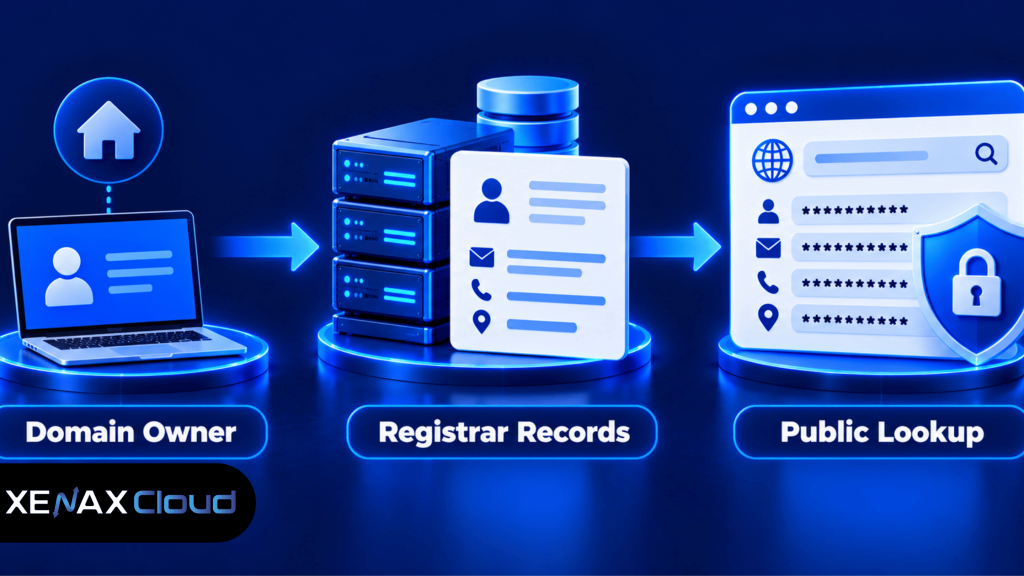
A privacy service does not necessarily prevent legitimate requests for registration information. Registrars and registries may disclose data when required by applicable law, policy, or a valid process. Privacy protection should therefore be understood as limiting routine public exposure, not creating an absolute barrier to identification.
The term WHOIS privacy is often used interchangeably with domain privacy, but the exact service can differ between registrars and extensions. Before registering, read the provider’s explanation of which fields are protected and how third-party contact requests are handled.
For the technical background, consult ICANN’s registration data information, which explains the role of domain registration data and related access policies.
How to Check Domain Privacy Before Registering
You can check domain privacy protection before completing a registration by reviewing the extension’s eligibility rules and the registrar’s privacy terms. Do not assume that a privacy feature works identically across every domain extension.
Follow these steps before you place an order:
- Choose the domain extension that fits your organisation and audience.
- Check whether the registrar supports privacy protection for that extension.
- Read which contact fields are hidden, redacted, or replaced.
- Confirm whether privacy protection is included or charged separately.
- Review the renewal policy and whether the service renews with the domain.
- Enter accurate registration details as required by the registrar and registry.
- Verify the public lookup result after registration is complete.
The fifth step matters because a domain and its privacy service may have different renewal conditions. A domain can remain registered even if a separate privacy feature expires, depending on the registrar’s terms. Check renewal notices rather than assuming that privacy will remain enabled indefinitely.
After registration, look up the domain using the registrar’s supported lookup tool or an official registration-data service. Check the visible fields and confirm that the result matches the privacy service’s stated behaviour. Avoid posting screenshots containing personal contact information in public support forums.
Domain Privacy Protection vs Public Registration Data
Domain privacy protection and public registration data serve different purposes: privacy limits routine exposure of eligible contact details, while registration data supports domain administration and accountability.
| Item | With privacy protection | Without privacy protection |
| Eligible personal contact fields | May be redacted or replaced | May be visible, subject to registry rules |
| Registrar access to required records | Retained as required | Retained as required |
| Domain name and status | May remain visible | May remain visible |
| Nameservers and technical details | May remain visible | May remain visible |
| Legal or policy-based disclosure | May still apply | May still apply |
The table describes common behaviour, not a guarantee for every extension. Registry policies and local requirements can change which fields are published, regardless of whether a registrar offers a privacy feature.
Privacy protection also does not replace good account security. A protected registration can still be affected by a compromised registrar account, stolen credentials, unauthorised changes, or a phishing attack. Use a unique password, enable multi-factor authentication where available, and keep the account recovery email secure.
Domain Privacy India: What Should Indian Domain Owners Check?
Domain privacy India refers to privacy options available to people and organisations registering domains while operating in India. Availability depends more on the extension and its registration rules than on the owner’s physical location alone.
An Indian shop owner, consultant, freelancer, or company may register an eligible domain while using accurate contact information. Before purchasing, check the supported extension, the registrar’s privacy policy, and any verification requirements that apply to that registration.
Xenax Cloud operates a Tier-III data centre in Banda, Uttar Pradesh, India, but domain registration and domain privacy are distinct services from hosting infrastructure. The location of a hosting server does not, by itself, determine whether a domain’s registration data is private.
For Indian businesses, practical checks include:
- Use a monitored business email address for domain administration where appropriate.
- Avoid using a personal residential address as a public business contact when a suitable business address is available and permitted.
- Keep registrant details accurate and update them when ownership or contact information changes.
- Check whether the extension’s rules permit privacy redaction or require certain details to be displayed.
- Confirm how to receive legitimate messages forwarded through a privacy contact service, if the registrar provides one.
Do not enter false details to avoid public disclosure. Incorrect registration information can create account recovery problems and may violate the registrar’s or registry’s rules. If an extension requires verified contact information, follow its process and use privacy protection only within the permitted rules.
Which Domain Extensions Support Privacy Protection?
Domain privacy protection availability varies by extension, registry policy, registrar, and the type of registrant. You should verify the specific extension instead of assuming a universal rule.
Some generic extensions may support redaction or a privacy service, while other extensions can impose additional eligibility, identity, or contact-publication requirements. Even within a supported extension, not every field is guaranteed to be hidden.
Before buying a domain, check these items on the registration page or in the registrar’s documentation:
- Eligibility: Is privacy protection supported for the extension you want?
- Coverage: Which fields are redacted or replaced in public lookup results?
- Contact forwarding: Can third parties still send a message to the registrant through a protected contact method?
- Renewal: Does the privacy service renew automatically with the domain, or does it have a separate term?
- Exceptions: Can the registrar or registry disclose data under applicable legal or policy requirements?
Xenax Cloud supports registration for extensions such as .com, .org, .net, .com.in, .xyz, and .online, among others. Check the domain registration page for current availability and the applicable terms before selecting an extension. Compare the renewal price with the first-year price as well, because the initial registration term may not reflect the ongoing cost.
Worked Example: A Small Business Registering a Domain in India
Consider a Jaipur-based design studio registering a domain for its business website and client email. The owner wants to avoid exposing a personal email address and residential contact details through routine public registration lookups.
The owner should first choose an available domain extension, then confirm whether the registrar supports privacy protection for that extension. If privacy is supported, the owner should check exactly which fields are redacted and whether a privacy contact method can forward legitimate enquiries.
If the extension does not support the desired privacy service, the owner should not assume that purchasing hosting or selecting a different server location will hide the registration details. Instead, the owner can choose a suitable supported extension, use appropriate business contact details where permitted, and follow the registry’s verification rules.
For registration, review the domain registration options at Xenax Cloud and confirm the privacy availability and renewal conditions for the specific extension before placing the order.
When Domain Privacy Protection Is Not Enough
Domain privacy protection is not a complete privacy or cybersecurity solution. It addresses a specific issue: the routine public display of eligible domain registration contact details.
It does not hide the content of your website, prevent visitors from seeing information you publish, encrypt your email, or secure your registrar account. It also does not guarantee that your identity can never be determined through legal requests or other information sources.
For better protection, combine registration privacy with sensible operational practices:
- Enable multi-factor authentication on the registrar account if supported.
- Use a unique, strong password and restrict account access to authorised staff.
- Keep account recovery details current and protected.
- Turn on domain-locking features where available to help prevent unauthorised transfers.
- Review renewal and expiry notices so the domain does not lapse unexpectedly.
- Keep a record of the registered owner and the business’s access procedures.
If the domain belongs to a company, make sure the business retains access even if the employee or contractor who registered it leaves. Domain ownership and access should be managed through authorised business accounts rather than relying on one person’s personal email.
Domain Privacy Protection: FAQs
Is domain privacy protection necessary for every domain?
No, domain privacy protection is not mandatory for every domain, but it can be useful when an eligible registration would otherwise expose personal contact details. Check the extension’s public-data rules first. Businesses using published corporate contact details may have different privacy needs from individuals registering a domain with personal contact information.
Does WHOIS privacy hide the domain owner’s identity completely?
No, WHOIS privacy does not guarantee complete anonymity. It may redact or replace eligible contact fields in public lookup results, but the registrar still retains information required to manage the registration. Information may also be disclosed under applicable legal, registry, or policy requirements.
Is domain privacy protection available in India?
Yes, domain privacy protection may be available to Indian domain owners for eligible extensions, depending on the registrar and registry rules. The owner’s location alone does not guarantee availability. Before registering, confirm whether the selected extension supports privacy, which contact fields are protected, and whether verification requirements still apply.
Does domain privacy protection hide my website’s IP address?
No, domain privacy protection does not hide a website’s IP address. It deals with eligible contact details in domain registration records, while DNS records and hosting infrastructure determine how a domain connects to a website. Separate DNS, hosting, or network configuration may affect IP visibility, but those are different controls.
Can I enable WHOIS privacy after registering a domain?
Often, yes, if the registrar supports privacy protection for that extension and the domain meets its eligibility rules. Sign in to the registrar account, open the domain’s management settings, and look for a privacy or registration-data option. Review the displayed terms and check the public lookup result after the change.
Does domain privacy protection affect domain ownership?
No, domain privacy protection does not normally transfer ownership of a domain to the privacy provider. The registrant remains subject to the registration agreement and applicable rules. Keep accurate ownership records and make sure the domain is registered to the correct individual or organisation, especially when it is used for business.
What should I check before buying a domain for my business?
Check the extension, registration requirements, privacy availability, renewal price, and account security features before purchasing. Use accurate registrant information and a business-controlled email address where appropriate. If privacy is essential, confirm in writing which fields will be hidden or redacted rather than relying only on a general “privacy protection” label.
Choose a domain extension that suits your business, verify whether domain privacy protection is supported for that extension, and review its renewal terms before ordering. Xenax Cloud’s domain registration page lists supported extensions; confirm the current registration and privacy conditions for your chosen domain before completing checkout.