A domain name for blog is the web address readers enter to find your published content. A suitable domain is easy to remember, spell and share, while reflecting your blog’s subject or brand. Before registering one, check availability, compare domain extensions, review renewal terms and confirm that you can manage the registration yourself.
Your domain becomes part of your blog’s identity across search results, social media, email signatures and links shared by other websites. Changing it later is possible, but it requires careful redirects and updates to avoid confusing readers or losing search visibility.
The right choice is not necessarily the shortest name or the most popular extension. It is the name that fits your content, remains usable as your blog grows and does not create avoidable legal or administrative problems.
What Makes a Good Domain Name for Blog?
A good domain name for blog is short enough to remember, clear enough to communicate your subject and simple enough to type without mistakes. It should also leave room for your content to expand if your interests change.
A domain name is a human-readable internet address that maps to the technical address used to locate an online service. The Domain Name System (DNS) translates domain names into information that browsers and other internet services use to reach the correct destination.
For example, a blog about home cooking could use a name related to recipes, kitchen techniques or the publisher’s identity. A name focused exclusively on one narrow recipe category might become restrictive if the blog later covers meal planning, ingredient guides and kitchen equipment.
Evaluate a potential name against these criteria:
- Memorability: Can someone recall it after hearing it once?
- Spelling: Can readers type it correctly without asking how it is written?
- Relevance: Does the name give a reasonable idea of the blog’s subject?
- Flexibility: Can it accommodate related topics you may publish later?
- Distinctiveness: Is it distinguishable from established publications and brands?
- Practicality: Is the name suitable for social profiles, spoken recommendations and future branding?
A descriptive name can help readers understand your subject, but an overly generic name may be difficult to distinguish from competing sites. A brandable name can offer more flexibility, provided it does not confuse visitors about the blog’s purpose.
Do not select a name only because it contains a popular search keyword. Search engines use many signals to understand and rank pages; placing a keyword in the domain does not guarantee higher rankings. Useful content, clear site structure and a good visitor experience remain important.
How Do You Choose a Domain for Blog Topics?
To choose domain for blog topics, start with the audience and subject, create a shortlist of names, and test each candidate for clarity, availability and future flexibility. A deliberate selection process is more useful than registering the first name that sounds appealing.
Begin by writing one sentence describing what your blog will help readers do. For example, a personal finance blog might explain budgeting, saving and financial planning for young professionals. The sentence gives you a topic boundary without forcing the domain to include every subject.
Next, create several naming directions:
- Descriptive: Names that clearly communicate the blog’s topic.
- Brand-led: Names built around a distinctive publication or creator identity.
- Audience-led: Names that reflect the needs or interests of the intended readers.
- Creative: Invented or combined words that are easy to pronounce and recognise.
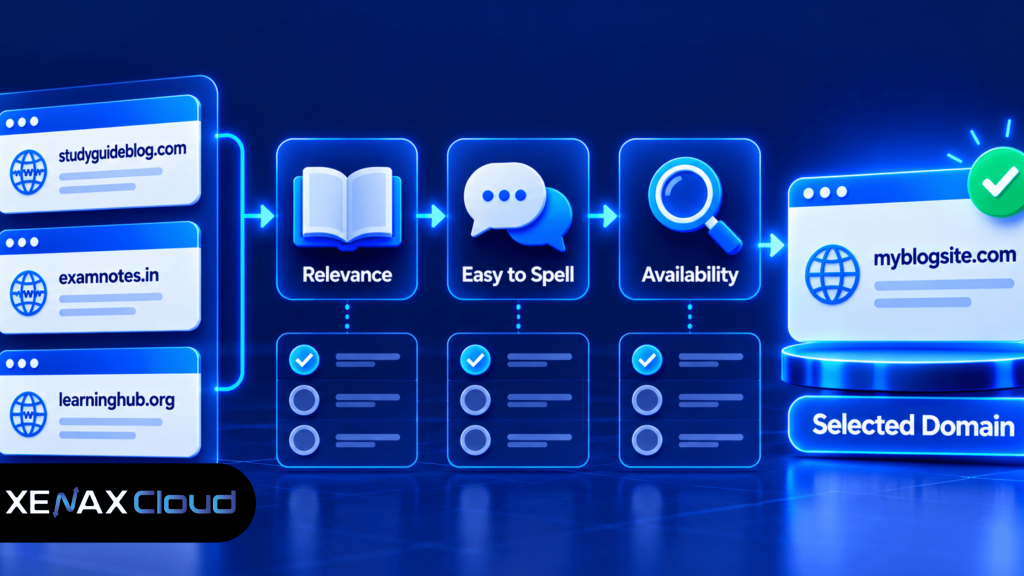
Blog domain name ideas by topic
Blog domain name ideas work best when they follow the blog’s actual subject rather than a temporary trend. Use these examples as naming patterns, not as claims that the domains are available.
| Blog category | Naming direction | Example idea |
| Food | Recipes and kitchen themes | The Daily Recipe |
| Travel | Places and exploration | Routes and Stories |
| Technology | Practical learning | Tech Explained |
| Personal finance | Planning and habits | Money Habit Journal |
| Education | Learning and study | Study Notes Hub |
The examples are brainstorming prompts only. Before choosing one, search for existing publications, registered trademarks and similar brand names. A phrase that sounds distinctive in isolation may already be used by another organisation.
Avoid adding unnecessary hyphens, complicated spellings or numbers that readers may forget. If the name needs a lengthy explanation every time you share it, consider a clearer alternative.
Which Domain Extension Should You Choose?
A domain extension is the ending of a web address, such as .com, .org or .net, and the right choice depends on your blog’s identity, audience and availability.
The extension is also called a top-level domain (TLD). Different extensions can communicate different associations, although the extension alone does not establish that a blog is authoritative or trustworthy.
| Extension | Common association | What to consider |
| .com | General-purpose websites and brands | A familiar choice for many commercial and personal blogs |
| .org | Organisations and communities | Consider whether the extension fits your intended identity |
| .net | Internet-related services and general websites | May suit a brand if the preferred .com is unavailable |
| .xyz | Broad, flexible use | Check whether it matches the expectations of your audience |
| .online | Websites and digital publications | Can clearly suggest an online destination |
These are general associations, not strict rules about who may publish a blog under each extension. Check the registration requirements and terms for the particular domain you want.
When comparing extensions, examine both the initial registration terms and the renewal terms. A domain can appear attractive at first but become less suitable if its ongoing cost or conditions do not fit your budget and publishing plans.
You should also check whether the extension is widely recognised by your intended readers. A less familiar ending is not automatically a bad choice, but you may need to communicate the full address more clearly when promoting the blog.
How to Check Domain Availability and Registration Terms
You should check a domain’s availability through a registrar before treating the name as yours. A name appearing unused in a browser does not mean it is available for registration.
Use a domain search tool to check the exact spelling and extension. If the preferred combination is unavailable, consider a meaningful variation rather than adding random numbers or punctuation.
Follow these steps before registering your domain.
- List several names that fit your blog’s subject and brand.
- Search each exact name with your preferred extension.
- Compare alternative extensions if your first choice is unavailable.
- Review registration, renewal and transfer conditions.
- Check existing brands and relevant trademark records.
- Confirm your registrant details and account access.
- Register the selected domain and save the confirmation.
Registration gives you the right to use a domain under the applicable registry and registrar rules for the registration period. It does not automatically grant trademark rights to the name, and it does not mean you own every similar name or variation.
The ICANN information for domain name registrants explains the relationship between registrants and registrars and outlines relevant registration responsibilities. Review the applicable registrar terms before completing your purchase.
Keep your registrant contact details accurate and secure your registrar account with a strong, unique password and multi-factor authentication where available. Store the account recovery information in a secure place so that access does not depend on a single employee or an old email address.
Blog Domain Name Ideas: What Should You Avoid?
Good blog domain name ideas avoid confusion with established brands, misleading spellings and wording that restricts the blog unnecessarily. A name should be practical to use, not merely clever on a brainstorming list.
One common mistake is choosing a domain that closely resembles a competitor or a recognised brand. Even if the spelling differs slightly, readers may confuse the sites, and the name could create a legal dispute. Search relevant trademark records and seek qualified legal advice if the proposed name is close to an existing brand.
Another mistake is choosing a domain based on a temporary trend. A blog may begin with one narrow topic but expand into related subjects, so a highly restrictive name can become awkward as the content changes.
Be careful with these issues:
- Unclear pronunciation: Readers may struggle to share the address verbally.
- Ambiguous spelling: People may type several versions of the name.
- Excessive length: Long addresses are harder to recall and communicate.
- Unnecessary hyphens: They introduce extra details readers must remember.
- Brand conflicts: Similarity to another organisation can create confusion.
- Unreviewed renewal terms: Registration conditions may change your long-term decision.
A domain should also work when displayed without context. Test it in a message, on a social profile and in a spoken recommendation. If readers cannot identify the intended spelling, revise the name before registration.
Worked Example: Choosing a Domain for a Jaipur Education Blog
A Jaipur educator planning a blog about study methods, exam preparation and learning resources should choose a name that reflects the subject while allowing room for future content. The decision should be based on clarity, availability and brand fit rather than on keyword inclusion alone.
Suppose the educator considers three options: a name focused only on one exam, a broad name about study techniques, and a personal brand name. The first may communicate a clear niche but restrict future coverage; the second can accommodate different learning topics; the third may suit a publication built around the educator’s own reputation.
The educator should test each candidate with the same checklist:
- Does the name fit the initial subject and likely future topics?
- Can students spell it after hearing it once?
- Is the preferred extension available?
- Does another educational website already use a confusingly similar name?
- Are the registration and renewal terms acceptable?
- Can the educator retain access to the registrar account over time?
For this example, the broad study-techniques name is the strongest starting point if it passes the availability and brand checks. It can support exam advice, study schedules and general learning resources without making the blog appear limited to a single examination.
There is no meaningful smaller or larger domain plan based on the number of blog posts. Domain registration is about the selected name and extension, whereas web hosting provides the storage and services used to publish the website. If the blog needs both, evaluate each service separately.
Domain Name for Blog: FAQs
How do I find the best domain name for blog content?
Start with a short list of names that describe your topic or establish your brand, then test spelling, memorability, availability and future flexibility. Search for similar brands before registering. A domain that is easy to communicate and suitable for your publishing plans is usually more practical than one chosen only to include a keyword.
Should my blog domain contain my main keyword?
No, your blog domain does not have to contain your main keyword to be useful or discoverable. A descriptive domain can help visitors understand your topic, but keyword inclusion alone does not guarantee search rankings. Choose a clear, credible name and use relevant keywords naturally in page titles, headings and useful article content.
Is .com better than other domain extensions for a blog?
Not in every situation; .com is a familiar option, but the best extension depends on your audience, brand and available names. Compare suitable alternatives and check their registration terms. Avoid selecting an unfamiliar extension solely because the preferred name is available if the result would confuse your intended readers.
Can I change my blog domain name later?
Yes, you can change a blog’s domain, but the move requires careful planning to protect access and search visibility. Set up appropriate redirects, update internal links and verify the new domain in relevant search tools. Keep the old domain registered while it is needed for redirects and audience transition.
Is a domain name the same as web hosting?
No, a domain name is the address readers use, while web hosting stores the files and database that make the blog work. You generally need both for a conventional self-hosted blog. They may be purchased from the same provider or separately, but you should keep track of their separate renewal dates and account access.
How can I protect my blog domain after registration?
Protect your domain by securing the registrar account, enabling multi-factor authentication where available and keeping contact details current. Set renewal reminders and understand the registrar’s expiration policy. Restrict account access to trusted people, save recovery details securely and review transfer rules before moving the domain to another provider.
Where can I register a domain name for my blog?
You can register a domain through a registrar that supports your preferred extension and provides clear registration, renewal and transfer terms. Xenax Cloud offers domain registration through its domain service. Check the current extension availability and conditions before ordering, and retain access to the account used to manage the registration.
To proceed, shortlist two or three names, verify their availability and compare the registration and renewal terms for each suitable extension. Once you select a name, register it through a provider whose account controls and terms you understand, then connect it to the hosting service you plan to use for publishing your blog.